Proudly serving Tucson, Oro Valley, Marana, Sahuarita, Green Valley, Vail & surrounding areasCall or Text 24/7: 520-569-2109

Roof Repair, Replacement & Maintenance in Drexel Heights, AZ

Tucson Quality Roofing provides roof repair, roof replacement, and roof coating for homes and businesses across Drexel Heights. Our roofing crews also handle tile and flat roof repairs, foam roofing, shingle roofing, and metal roofing. When storms expose a weak point, we provide emergency roof leak repair, while commercial properties can turn to us for repair and replacement work. Every recommendation starts with the roof's actual condition, material, and drainage needs.

Drexel Heights roof surfaces can climb past 160 degrees, then face monsoon downpours that drop an inch of rain in under an hour. That heat-and-water cycle cracks membranes, stresses sealants, and exposes weak flashing. The area includes 1960s ranch homes with low-slope additions as well as newer stucco homes with S-tile, and each assembly fails differently. Our licensed roofers inspect the roof and document repairs with photos so the scope is clear before work moves forward.

We serve Drexel Heights, Midvale Park, Valencia West, the San Xavier District corridor, and properties along Ajo Way and Mission Road, with free itemized roof estimates and no pressure to sign the same day.

★ ★ ★ ★ ★4.9/5 Average Rating - 20+ Years of Experience - Drexel Heights Roofing Contractor Specialists - Residential & Commercial
Roofing Services
Roofing Services in Drexel Heights, AZ

Choose a repair, replacement, coating, or material-specific roofing service based on the roof's condition and long-term goals. The same material-focused approach is also available for Oro Valley, AZ properties.

Roof Repair

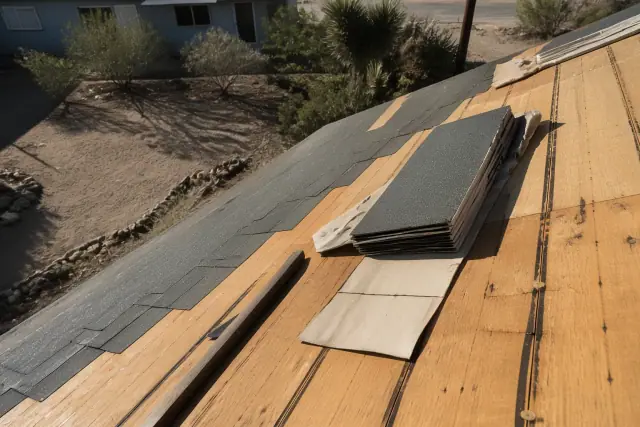
Bundles of shingles and roofing materials on a steep-sloped roof in Drexel Heights, AZ under desert sunlight.

A standard patch typically costs $361 to $439, while more involved repairs can run $395 to $1,966 depending on decking damage and material. We diagnose the source before patching and document the completed repair with photos.

Explore Service

Roof Replacement

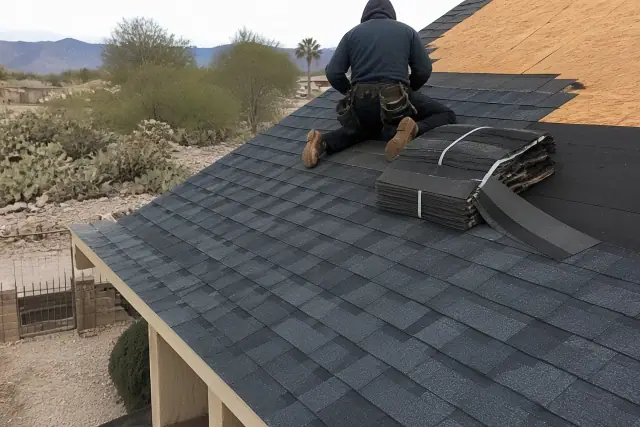
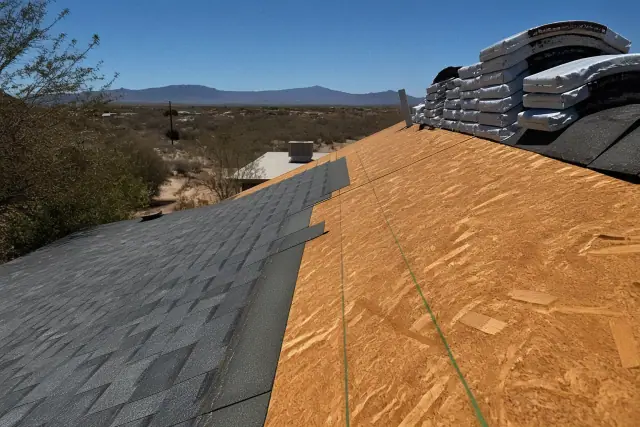
Contractor kneeling on a sloped roof installing asphalt shingles in Drexel Heights, AZ.

Replacement work can include tear-off, decking repair, underlayment upgrades, and installation to current manufacturer specifications. The final walk-through explains the completed scope and workmanship coverage.

Explore Service

Roof Coating

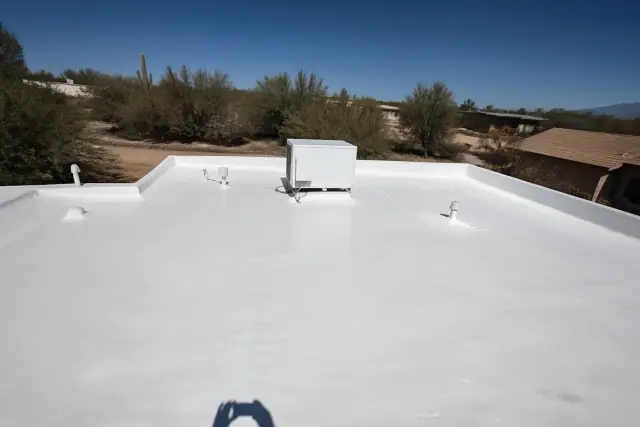
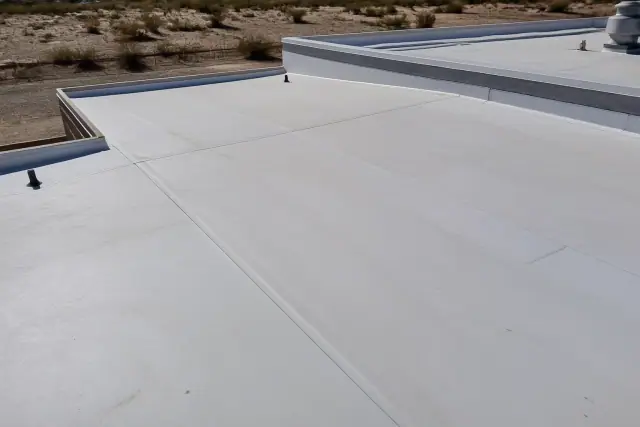
Finished reflective white roof coating on a residential home in Drexel Heights, AZ, surrounded by desert scrub.

Elastomeric and silicone coatings seal hairline cracks and reflect heat away from suitable flat or low-slope membranes. When the existing roof remains a sound candidate, coating can cost a fraction of full replacement and add years of service life.

Explore Service

Tile Roof Repair

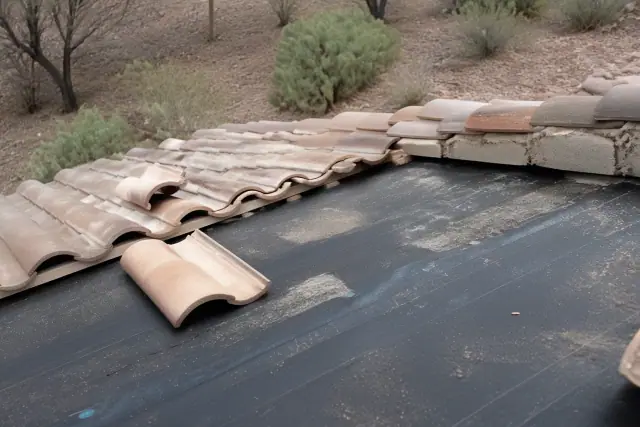
Contractor removing clay roof tiles to inspect the underlayment during a repair in Drexel Heights, AZ.

Concrete and clay S-tile can outlast the underlayment beneath it. We lift and reset tile to replace torn felt or synthetic underlayment, taking care to match the existing color and profile.

Flat Roof Repair

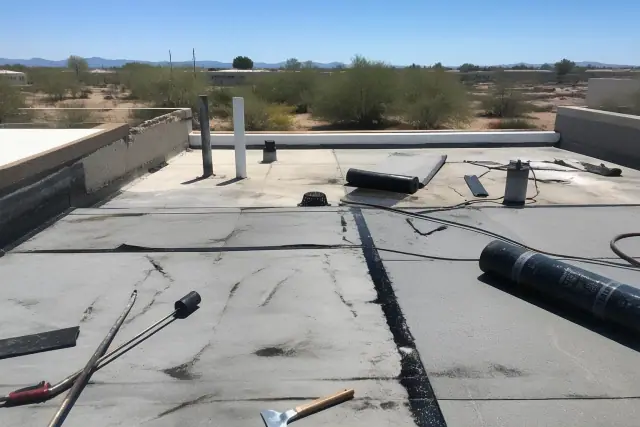
Flat roof repair with heat-welded seams on a commercial building rooftop in Drexel Heights, AZ.

Flat roofs on additions, garages, and older ranch homes need dependable drainage after monsoon rain. Repairs can address membrane splits, weak seams, ponding, and slope issues with materials rated for continuous desert UV exposure.

Foam Roofing

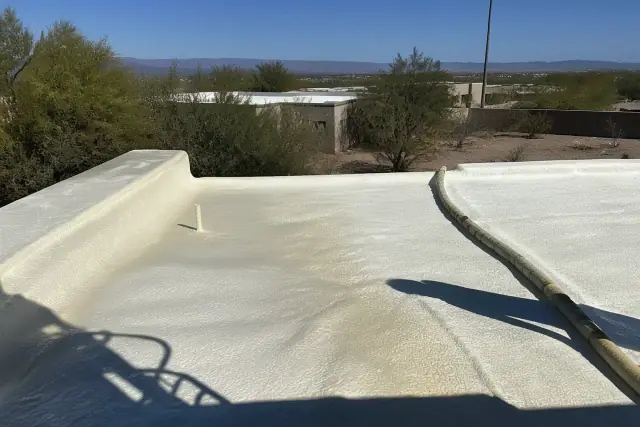
Polyurethane foam being sprayed onto a residential flat roof in Drexel Heights, AZ.

Spray polyurethane foam creates a seamless, fully adhered roof surface with useful insulating value. It fits commercial flat roofs and additions where drainage and insulation must work together.

Shingle Roofing

Technician installing shingles on a steep roof in Drexel Heights, AZ with desert landscape in the background.

Asphalt shingles typically last 15 to 30 years, although intense Tucson-area UV can shorten that life on sun-facing slopes. We replace cracked, curled, or granule-bald shingles and check nail patterns against manufacturer wind-rating requirements.

Metal Roofing

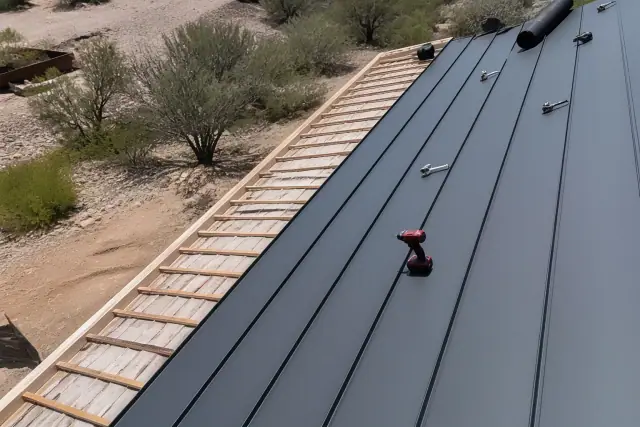
Worker installing standing seam metal panels on a residential roof in Drexel Heights, AZ.

Standing-seam and corrugated metal systems can reduce cooling-related energy costs by up to 40% compared with dark asphalt shingles. With minimal maintenance, metal roofing commonly lasts 40 to 70 years.

Emergency Roof Leak Repair

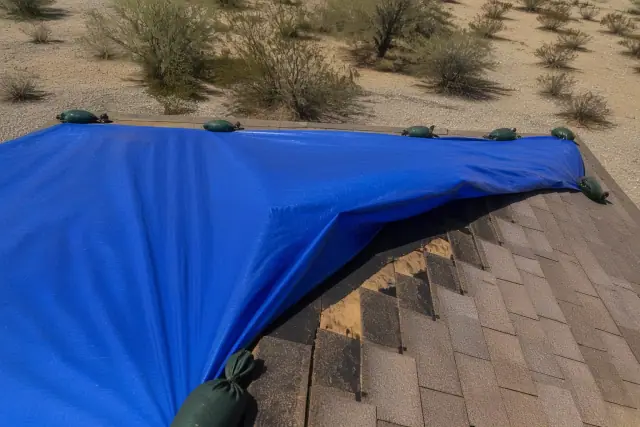
Heavy-duty tarp covering a damaged residential roof in Drexel Heights, AZ, surrounded by desert landscape.

Wind-driven monsoon rain can expose a weak roof point within hours. Emergency work focuses on tarping exposed areas, removing standing water, and stopping active intrusion before it reaches drywall and insulation.

Commercial Roofing

Heat-welded membrane seam on a flat commercial roof in Drexel Heights, AZ, with desert landscape in the background.

Retail strips and warehouses near the Ajo Way corridor need flat and low-slope systems suited to foot traffic, rooftop equipment, and long UV exposure. We plan repairs and replacements around business hours whenever possible and match the system to the building's use and mechanical load.

Choosing a Roofing Solution

How to Choose the Right Roof Service in Drexel Heights

A sound choice starts with the damaged area, roof material, drainage, remaining service life, and the cost of repeated repairs. We inspect those factors before recommending a targeted repair, coating, section replacement, or full roof replacement.

Repair or Replacement Scope

A localized defect may justify a patch, but widespread damage changes the calculation. We also check the industry's 25% rule, a common code and insurance benchmark that can require an affected roof section to be brought up to current code.

Roof Type and Material Fit

S-tile, asphalt shingles, metal panels, foam, and low-slope membranes respond differently to heat, movement, and moisture. Matching the repair method to the assembly protects surrounding material and addresses the actual failure point.

Project Size and Budget

A standard 2,000 square foot architectural shingle roof runs roughly $8,900 to $13,100. A larger home around 4,000 square feet often falls between $16,000 and $28,000 after roof surface area, pitch, and material grade are considered, while tile and metal can cost more.

Drainage and Storm Exposure

Drexel Heights sees its heaviest monsoon activity from July through September. Drainage capacity, scupper condition, seam strength, and flashing details all matter when wind pushes rain across a low-slope roof.

Heat and Energy Performance

Reflective coatings, foam roofing, and metal each approach desert heat differently. The right option depends on the existing deck, insulation needs, drainage, and whether the goal is repair, restoration, or replacement.

Permit and Code Requirements

Pima County enforces adopted editions of the International Residential Code and International Building Code, and re-roofing in unincorporated Drexel Heights typically requires a permit. Roofing contractors must also hold an active Arizona Registrar of Contractors license.

Drexel Heights Roof Issues

Common Roofing Problems for Local Properties

National roof repair and replacement spending reached close to $31 billion in 2024, roughly 30% above 2022, with storm-related damage claims driving much of the increase. In Drexel Heights, intense UV, monsoon rain, dust, hail, and rapid temperature changes create a distinctive set of roof failures.

Request Roof Inspection

UV and Surface Heat Damage

Long desert sun exposure dries membranes, cracks sealants, and accelerates shingle granule loss. Sun-facing shingle slopes often show cracking, curling, and granule loss sooner than less exposed areas.

Wind-Driven Roof Leaks

Monsoon wind pushes rain through small flashing, seam, and underlayment defects. Because water travels along decking and framing, the ceiling stain is rarely directly below the entry point.

Failed Tile Underlayment

Concrete or clay S-tile may still look intact after the felt or synthetic layer beneath it has torn or deteriorated. Careful lifting and resetting exposes that hidden water barrier without needlessly breaking the surrounding tile field.

Ponding and Blocked Drainage

Dust-storm debris can clog scuppers and leave water standing on flat additions, garages, and commercial roofs. Persistent ponding compounds seam and membrane wear, so drainage is part of the repair diagnosis.

Flashing and Penetration Gaps

Chimneys, swamp coolers, pipe boots, and other penetrations interrupt the roof surface. Separation at those transitions is a frequent source of leaks even when the surrounding roof covering remains serviceable.

Thermal Cycling and Loose Fasteners

Roof assemblies can move from freezing overnight lows to triple-digit daytime heat even during winter months. Repeated expansion and contraction cracks sealants, loosens fasteners, and opens small gaps that later admit rain.

Why Choose Us

Why Choose Tucson Quality Roofing in Drexel Heights?

Our crews work on residential and commercial roofs across Drexel Heights, Midvale Park, and the greater southwest Tucson area. That local experience informs how we inspect tile, shingles, flat membranes, coatings, foam, and metal under desert conditions.

Drexel Heights Weather Knowledge

Working in a monsoon corridor changes how penetrations are flashed and how low-slope drainage is evaluated. We account for wind-driven rain, UV exposure, seasonal humidity, and heat-cool cycling rather than treating every roof like it sits in a mild climate.

Licensed and Permit-Ready Work

Tucson Quality Roofing provides licensed and insured roofing work under Pima County permitting jurisdiction. We pull required permits, schedule inspections, and prepare the project to meet applicable code and manufacturer requirements.

Documented, Itemized Recommendations

Moisture-meter readings, attic inspection, and repair photos help connect a visible symptom to its source. Free estimates are itemized, and customers are not pressured to sign on the same day.

Simple Roofing Process

Our Roof Repair Process in Drexel Heights

The process is designed to identify the cause before selecting a repair. Each step moves from inspection and scope review through code-ready work, documentation, and cleanup.

01.

Inspect the Entire Roof

We examine flashing, penetrations, roof covering, decking condition, drainage, and attic ventilation. The inspection establishes whether damage is local or part of a wider system problem.

02.

Trace the Failure Source

For leaks, we follow water paths with moisture meters and an attic inspection before opening the roof. This avoids placing a patch directly above a ceiling stain when the real entry point is elsewhere.

03.

Compare Repair Options

We present a targeted patch, coating, section replacement, or full replacement when each option fits the observed condition. The scope and cost range are explained so the financial tradeoffs are clear.

04.

Plan Permits and Scheduling

After the scope is approved, we arrange the schedule and any required Pima County permit or inspection. Materials and installation details are matched to the roof assembly and planned use.

05.

Complete the Roofing Work

Crews protect landscaping and gutters, then complete the approved repair or installation to manufacturer specifications. Commercial scheduling is coordinated around business hours whenever possible.

06.

Review, Document, and Clean Up

A final walk-through and photo documentation show what was completed and explain workmanship coverage. Cleanup closes the job, with roofing debris hauled away the same day.

Roofing Applications

Practical Roof Solutions for Homes & Businesses

Case Study 1: Tile Home Repair: On a newer stucco home with S-tile, lifting and resetting existing tile can provide access to torn underlayment while preserving surrounding material.

Case Study 2: Low-Slope Addition: A ranch-home addition with ponding may need seam reinforcement and drainage correction rather than another surface-only patch.

Case Study 3: Commercial Flat Roof: A retail or warehouse roof can be evaluated for foam or elastomeric coating when insulation, drainage, rooftop equipment, and business-hour access all shape the scope.

Plan Your Roof Project

Request a
Drexel Heights Roof
Estimate

Get a free, itemized estimate for repair, coating, or replacement based on the roof's material, condition, and drainage. Call to discuss a home, multi-unit property, or commercial building in the Drexel Heights service area.

Roofing Help

Roofing FAQs for Drexel Heights, AZ

These answers cover roof costs, permits, leak diagnosis, material choices, maintenance, and service coverage. A roof inspection is the best way to turn a general answer into a property-specific scope.

Call a Roofing Specialist

The average Arizona roof replacement costs around $9,526, with most projects falling between $5,868 and $13,217 depending on size, pitch, and material. Tile generally costs more than asphalt shingles because of material and labor intensity, while metal costs more up front but offers a longer service life. Tucson Quality Roofing provides a free, itemized estimate for the actual roof rather than relying on a generic range.

Warning signs include pressure to sign the same day, refusal to provide a physical business address or Arizona Registrar of Contractors license number, and a vague estimate with no itemization. A legitimate roofer should give you time to compare quotes, ask for references, and understand the scope. Clear documentation is more useful than a storm-chasing sales pitch.

Material type, roof pitch, the size of the damaged area, and whether decking or underlayment has failed all affect cost. A small surface patch is different from a repair that requires tile removal, membrane work, or decking replacement. An itemized inspection-based estimate separates those components.

Re-roofing work in unincorporated Drexel Heights typically requires a permit through the Pima County Development Services Department. The county enforces adopted residential and building codes, and required inspections depend on the project scope. Tucson Quality Roofing pulls permits and schedules inspections for its projects.

A localized flashing, seam, tile, or shingle failure may be repairable when the surrounding assembly remains sound. Replacement becomes more practical when damage is widespread, the deck is deteriorated, or repeated repairs no longer make financial sense. An inspection should compare remaining service life, code implications, and the cost of each option.

Water can travel along decking, underlayment, rafters, and insulation before it becomes visible indoors. Common entry points include separated flashing, cracked pipe boots, and degraded underlayment. Moisture meters and an attic inspection help trace the path before the roof is opened.

Often, intact concrete or clay S-tile can be lifted and reset so damaged felt or synthetic underlayment can be replaced below it. The repair method depends on how far the underlayment failure has spread and whether nearby tiles can be handled without damage. Matching the existing tile profile and color helps the repaired area blend in.

Clogged scuppers, dust-storm debris, weak slope, settled decking, or poorly placed drainage can leave water standing. The repair may require clearing the outlet, reinforcing seams, correcting slope, or restoring the membrane. A surface patch alone will not solve a drainage problem.

Standing-seam and corrugated metal can reflect more solar heat than dark asphalt shingles and offer long service life with limited maintenance. The roof structure, material selection, and the property's cooling goals still need to be evaluated. Cost and long-term value should be compared with tile, shingles, foam, and coatings.

Industry data cited in the source indicates that building owners who follow a maintenance schedule can avoid tens of thousands of dollars in premature replacement costs over 20 years. A pre-monsoon visit can identify loose flashing, blocked drainage, open seams, and damaged roof covering before heavy rain arrives. The useful maintenance interval depends on the roof system and its condition.

An elastomeric or silicone coating may fit a flat or low-slope roof when the existing assembly is still sound enough to restore. Coatings can seal hairline cracks and improve heat reflection, but they cannot correct extensive decking damage or every drainage defect. Inspection determines whether restoration is a responsible option.

Spray polyurethane foam works well on commercial flat roofs and additions where a seamless surface, drainage, and insulating value are useful together. It is especially relevant when drainage and insulation need to work as one roofing approach. Existing moisture and deck condition should be checked before selecting the system.

Emergency roof work focuses on tarping exposed areas, removing standing water, and stopping active intrusion before it reaches more drywall or insulation. Once the water is controlled, a follow-up inspection should identify the permanent flashing, membrane, tile, shingle, or drainage repair.

Yes. Residential work includes single-family homes, duplexes, and small multi-unit properties with tile, shingles, and low-slope sections. Commercial work covers repairs, replacement, foam, and coatings for retail, warehouse, and other flat or low-slope buildings.

The stated service area includes Drexel Heights, Midvale Park, Valencia West, the San Xavier District corridor, Tucson, South Tucson, Sahuarita, Green Valley, Three Points, and Robles Junction. Crews also work along Ajo Way, Mission Road, Valencia Road, and Drexel Road. Service for a specific property can be confirmed when requesting an estimate.