Proudly serving Tucson, Oro Valley, Marana, Sahuarita, Green Valley, Vail & surrounding areasCall or Text 24/7: 520-569-2109

Roof Repair and System Replacement for Flowing Wells, AZ Properties

Tucson Quality Roofing provides roof repair in Flowing Wells, Arizona, for homeowners and property managers facing desert heat and monsoon damage. Our services include roof replacement and coating, tile and flat roof repairs, and foam, shingle, and metal roofing. We also handle emergency roof leak repair and commercial roofing across the area. Every project receives the same workmanship standard, whether it is a $400 patch or a full tear-off.

Summer roof surfaces regularly exceed 160 degrees Fahrenheit, while monsoon wind and rain can lift shingle tabs, shift tile, and expose weakened underlayment. Flowing Wells also combines ranch-style homes from the 1950s-70s with newer stucco construction, so the right repair depends on the roof system and its condition. Caliche soil and desert drainage patterns can add strain to flat roofs and parapet walls during storm season. Our licensed crews inspect the full assembly and use methods suited to Pima County requirements and local UV exposure.

We serve Flowing Wells CDP, population 16,419 as of the last census, plus Amphitheater, Casas Adobes, Prince Village, and the North Flowing Wells Road and Wetmore Road corridors. Call for a free roof estimate.

★ ★ ★ ★ ★4.9/5 Average Rating - 20+ Years of Experience - Flowing Wells Roofing Contractor Specialists - Residential & Commercial
Roofing Services

Roofing Services for Flowing Wells, AZ

From urgent leaks to planned replacements, we match the repair or roofing system to the property's slope, material, drainage, and budget. The same practical service planning is available for properties in Drexel Heights, AZ .

Roof Repair

Technician kneeling on a steep shingled roof while installing materials on a sunny day in Flowing Wells, AZ.

We inspect the whole roof before quoting repairs, then address flashing failures, shingle damage, cracked tile, membrane punctures, and other visible trouble. National roof repair costs range from $395 to $1,966 depending on scope, while a focused fix can cost far less than replacing a full section. Explore Service

Explore Service
Roof Replacement

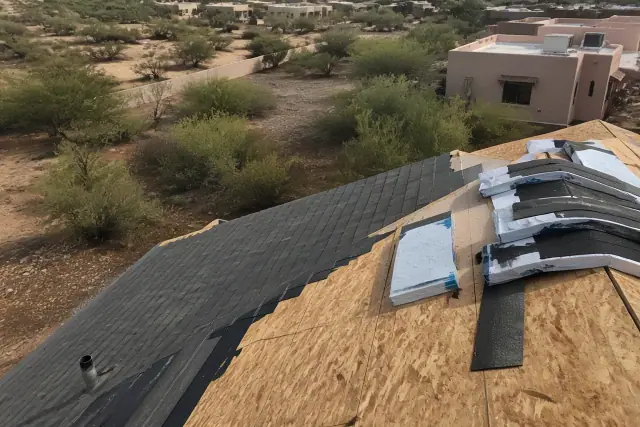
Asphalt shingles being installed on a steep residential roof in Flowing Wells, AZ.

When patching is no longer economical, replacement includes tear-off, deck inspection, UV-rated underlayment, and disposal of old material. Tucson Quality Roofing also handles replacement permits through Pima County Development Services. Explore Service

Explore Service
Roof Coating

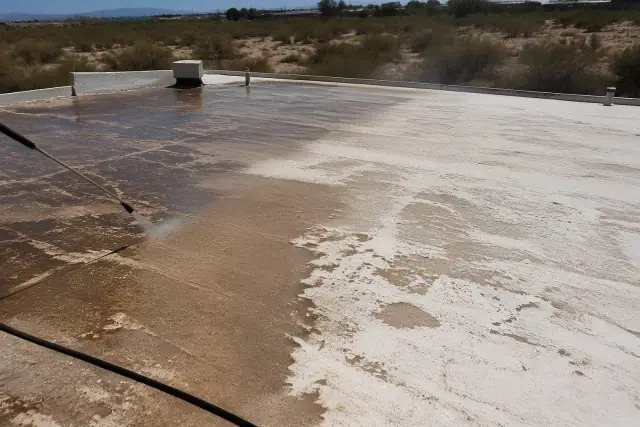
A worker pressure washing a weathered roof surface before applying reflective coating in Flowing Wells, AZ.

Rubberized, acrylic, and elastomeric coatings reflect UV radiation and seal minor cracking on compatible flat and foam roofs. Climate-suited products include 7000-grade coatings, and a quality application can add 10+ years to an existing roof's service life. Explore Service

Explore Service
Tile Roof Repair

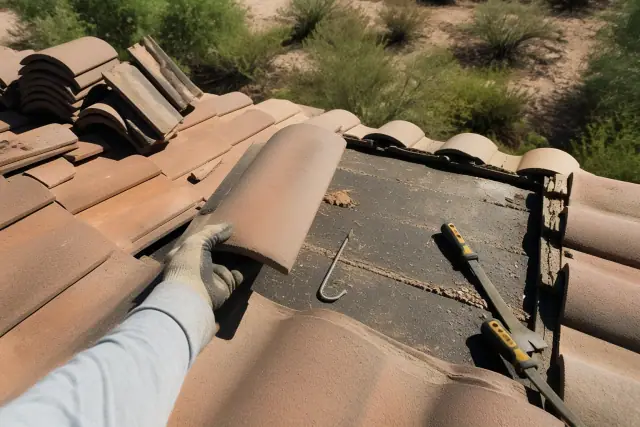
A roofer's hands repairing clay tiles and inspecting the underlayment on a roof in Flowing Wells, AZ.

Tile repairs can replace individual Spanish or concrete tiles, rebed ridge caps, and restore underlayment or battens without disturbing sound material. Regional supplier relationships help the crew find close profile and color matches for older roofs.

Flat Roof Repair

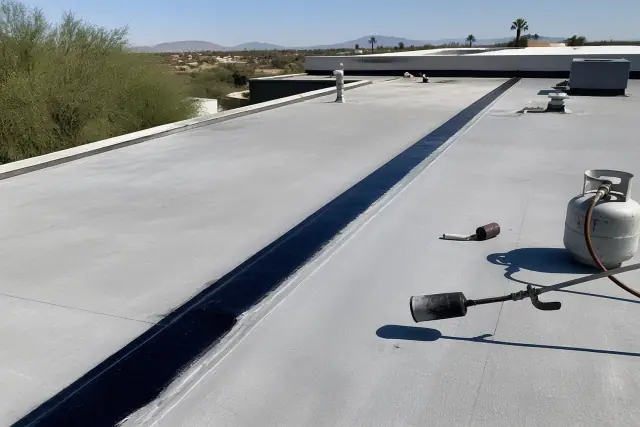
A fresh heat-welded seam patch on a commercial flat roof during repairs in Flowing Wells, AZ.

Flat and low-slope roof work covers TPO, EPDM, and modified bitumen on additions, carports, and commercial buildings. Repairs address ponding, open seams, and punctures with material-matched methods, followed by a water-flood or low-pressure air test.

Foam Roofing

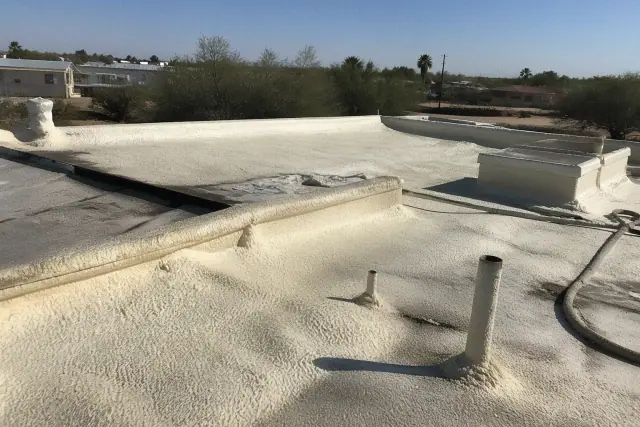
Worker applying polyurethane foam insulation to a residential roof in Flowing Wells, AZ.

Spray polyurethane foam creates a seamless insulating layer on flat and low-slope roofs, then receives an elastomeric topcoat for UV protection. Foam roofs typically need recoating every 10-15 years to maintain that protective membrane.

Shingle Roofing

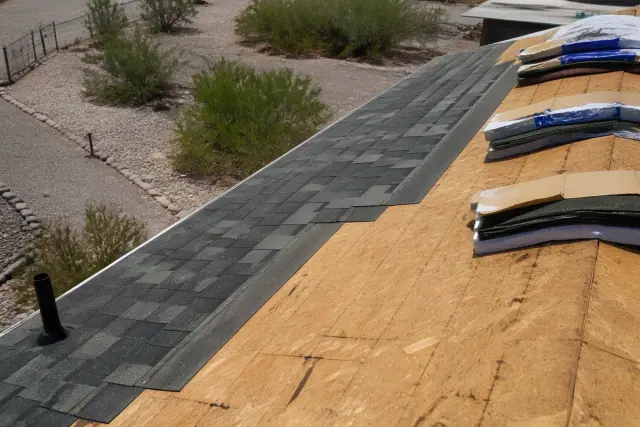
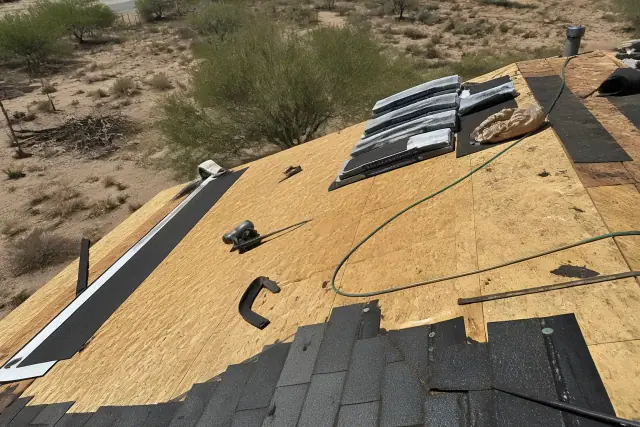
New asphalt shingles being installed on a roof in Flowing Wells, AZ, with bundles on wooden decking and desert landscape.

Shingle roofing service addresses wind-lifted tabs, granule loss, UV cracking, and nail pops on Flowing Wells homes. The crew inspects beyond the visible patch so small defects are less likely to become larger leaks.

Metal Roofing

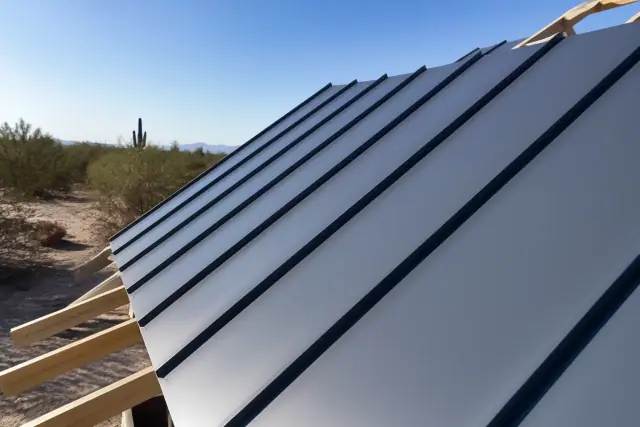
Standing seam metal roof panels fastened to a sloped frame under bright sunlight in Flowing Wells, AZ.

Standing-seam and exposed-fastener metal roofing can be installed or repaired for loose panels, failed fastener sealant, and rusted flashing. Reflective metal panels can run 50-60 degrees cooler than dark asphalt shingles in direct summer sun.

Emergency Roof Leak Repair

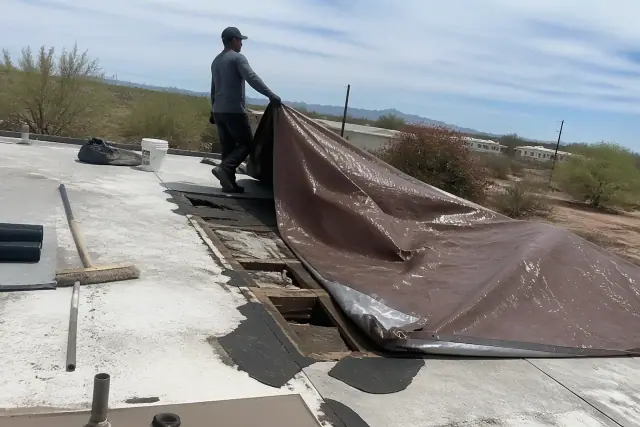
A contractor places a reinforced tarp over a damaged roof during repairs in Flowing Wells, AZ, above desert landscaping.

Emergency crews trace active water intrusion with moisture meters and infrared tools, tarp exposed areas, and limit water migration toward drywall and insulation. Same-day roof repair is the goal when a call arrives before early afternoon and conditions allow safe access.

Commercial Roofing

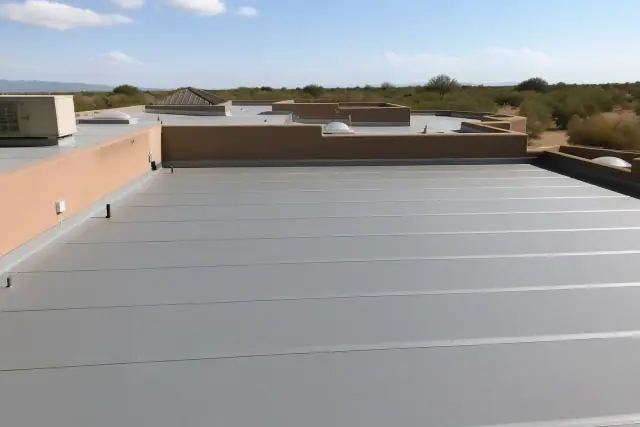
Finished heat-welded membrane roofing on a commercial building in Flowing Wells, AZ.

Commercial roofing includes TPO, foam, and built-up systems for retail, warehouse, and office properties. Work can be coordinated around business hours, with itemized estimates and maintenance planning that help property managers budget by system and scope.

Roofing Decisions

How to Choose Roofing Work in Flowing Wells

A useful recommendation starts with roof condition, not a preset sales package. Tucson Quality Roofing compares the damaged area, material, slope, drainage, age, and project budget before recommending repair, coating, or replacement.

Repair or Full Replacement

Localized damage may justify a durable patch, while widespread wear or an aged assembly can make a tear-off more economical. The inspection defines the damaged area before that recommendation is made.

Roof Material and Slope

Asphalt shingles, tile, metal, foam, TPO, EPDM, and modified bitumen fail in different ways. Roof pitch and existing material determine the compatible repair or replacement method.

Heat and UV Exposure

Roof surfaces in the Tucson basin regularly reach 150-160 degrees Fahrenheit in summer. Materials, underlayment, sealants, and topcoats should be selected for repeated UV exposure and thermal movement.

Drainage and Seam Condition

Flat roofs and parapet walls need close attention to ponding, penetrations, valleys, and seams. Drainage checks help separate a localized membrane repair from a broader system problem.

Project Cost and Financing

Itemized estimates explain how size, pitch, material, tear-off, and deck repair affect the total. Financing options are available for larger replacement and commercial roofing projects.

Roof Age and Remaining Life

Age alone does not determine whether a roof needs replacement. Decking, underlayment, flashing, seams, and maintenance history show whether repair still offers practical value.

Flowing Wells Roof Issues

Common Roofing Problems for Flowing Wells Properties

Constant desert exposure followed by sudden monsoon weather creates a distinct mix of roofing failures. An inspection can trace the symptom to its source before interior finishes, insulation, or decking sustain more damage.

Request Roof Inspection

UV and Thermal Wear

Year-round sun drives expansion and contraction that weakens sealants, shingle adhesive, and exposed coatings. Granule loss and surface cracking are common signs that the roof needs attention.

Monsoon Water Intrusion

Heavy rainfall can exploit small flashing, underlayment, or penetration defects and move water toward drywall and insulation. Leak tracing helps locate the path when the entry point is not obvious from above.

Wind-Lifted Roofing

Monsoon gusts can lift shingle tabs, loosen metal panels, shift tile, and separate flashing. Prompt stabilization reduces the exposed area until permanent repair can be completed safely.

Ponding and Open Seams

Flat and low-slope roofs can hold water where drainage is poor or caliche-influenced settling changes flow. Separated TPO, EPDM, or modified bitumen seams need a repair technique matched to the membrane.

Cracked or Slipped Tile

Tile roofs often leak because a tile has cracked or shifted and exposed the underlayment below. Replacing the affected tile and repairing its support can preserve surrounding material that remains sound.

Dust-Clogged Roof Drainage

Dust storms and haboobs can drive debris into roof valleys, scuppers, and vents. Blockages redirect storm water, so drainage paths should be cleared and checked before monsoon rainfall.

Why Choose Us

Why Choose Tucson Quality Roofing in Flowing Wells

This family-owned roofing company works on the varied housing stock and commercial roofs found throughout this part of Pima County. Local experience is paired with documented inspections, code-aware installation, and a clear explanation of scope and warranty coverage.

Flowing Wells Roof Experience

Work on ranch homes near Flowing Wells Road with original 1960s decking and newer stucco construction near Prince Village informs material and repair recommendations for local properties.

Code-Aware Roofing Methods

Crews follow manufacturer specifications and applicable International Building Code and International Residential Code roofing provisions adopted by Pima County. Roofing work is covered under licensing through the Arizona Registrar of Contractors.

Documented Final Inspection

Findings can be documented with photos and written storm assessments for relevant insurance claims. Before closeout, the crew checks penetrations, seams, flat-roof drainage, and the warranty terms tied to the work.

Six-Step Process

Our Roofing Process in Flowing Wells

Each project moves from a complete roof assessment to a defined repair or installation plan and final quality check. The scope changes by system, but the inspection and closeout standards remain consistent.

01.

Schedule a Roof Estimate

Call to arrange a free estimate and describe the leak, storm damage, age concern, or planned roofing project. Emergency conditions are prioritized according to safety and active water intrusion.

02.

Inspect the Full Roof

The assessment covers decking, flashing, penetrations, seams, drainage, and the visible problem. Moisture meters and infrared tools may be used when a leak path is hidden.

03.

Review Findings and Options

Photos and findings clarify whether the practical choice is repair, coating, maintenance, or replacement. The estimate itemizes the scope instead of relying on the home's footprint alone.

04.

Prepare Permits and Materials

Replacement work includes Pima County permitting, material planning, and selection of underlayment or coatings suited to desert UV and heat. Tile profiles and membrane types are matched before work begins.

05.

Complete and Test the Work

Crews follow manufacturer methods during repair or installation. Flat-roof seams may receive a water-flood or low-pressure air test, and repaired drainage paths are checked for proper flow.

06.

Perform the Final Walkthrough

The final inspection revisits penetrations, flashing, seams, and drainage before closeout. Warranty coverage is explained according to the material and approved scope of work.

Roofing Fit

Roofing Options for Flowing Wells Homes & Businesses

Case Study 1: Older Ranch Roofs: Original asphalt shingles and aging decking call for a deck-and-flashing assessment before repair or replacement decisions are made.

Case Study 2: Flat and Commercial Roofs: TPO, EPDM, modified bitumen, foam, and built-up systems benefit from seam-specific repair, drainage checks, and maintenance scheduled around property use.

Case Study 3: Coated Flat Roofs: When roof condition supports coating, a $3,000-$6,000 application can delay a $9,500+ full replacement by a decade or more.

Free Roof Estimate

Schedule a Flowing Wells
Roofing
Estimate

Talk with Tucson Quality Roofing about roof repair, replacement, coating, storm damage, or a roofing system for your Flowing Wells property. Request a free estimate to receive an inspection-based scope and itemized pricing.

Roofing Questions

FAQs About Roofing in Flowing Wells, AZ

These answers cover roof rules, timing, costs, materials, inspections, and service details described for Flowing Wells properties. Exact recommendations and pricing still depend on an on-site roof assessment.

Call Our Roofing Team

The 25% rule refers to building-code provisions stating that when more than 25% of a roof surface requires repair or replacement within a 12-month period, the affected roof section must be brought up to current code rather than patched piecemeal. Tucson Quality Roofing measures the damaged area during inspection and explains how the rule affects permitting through Pima County Development Services.

Late fall through winter, roughly November through February, generally offers better scheduling availability in the Tucson area than the July-through-September monsoon season. Cooler-season scheduling can also shorten the wait between estimate and installation, although actual pricing still depends on the roof and materials.

It depends on the material and condition. A 20-year-old asphalt shingle roof in this climate may be near its practical service life, while tile, foam, and metal systems commonly last 40-70 years with proper maintenance and recoating. The decking, underlayment, flashing, and surface condition matter more than age alone.

National averages for a typical residential replacement run from $5,900 to $12,900. A 1,800-square-foot home in Flowing Wells generally falls in the $8,000 to $16,000 range depending on pitch, material, and deck repairs, with shingles usually toward the lower end and tile or standing-seam metal higher.

Arizona roof replacement costs generally track the national average of $9,526, with a typical range from $5,868 to $13,217. Home size, roof complexity, material, UV-rated underlayment, and heat-reflective coatings can all change the total.

A 2,000-square-foot shingle roof replacement typically runs from $9,000 to $16,000 in the Tucson area, including tear-off, disposal, underlayment, shingles, and labor. Pitch, the number of old layers, and deck repairs affect the final figure, so roof area is confirmed on site rather than estimated only from floor area.

Foam and metal roofing perform well in desert heat because of their reflective and insulating properties, while tile roofing can last 40-50 years or more when its underlayment is maintained. Asphalt shingles remain a budget-friendly choice but often have a shorter service life under high UV exposure. The right option depends on budget, roof pitch, and expected time in the home.

A practical schedule is once in spring before monsoon season and again in late fall after the hottest weather. Monsoon activity typically runs from July through September, and early checks can catch lifted tile or cracked flashing before the emergency-leak calls that are common in July and August.

Yes. Emergency roofing calls for active leaks, blown-off shingles, and torn flashing are prioritized even when storms fall outside normal business hours. Crews work to tarp and stabilize exposed areas quickly, then make permanent repairs when access is safe; same-day repair is the goal for calls received before early afternoon.

The repair method is matched to the existing TPO, EPDM, or modified bitumen membrane and may use a heat-welded or adhesive patch. The crew also checks ponding, penetrations, and seam separation, then verifies the repair with a water-flood or low-pressure air test.

Spray polyurethane foam roofs typically need an elastomeric recoat every 10-15 years. The protective topcoat limits UV degradation, so its condition should be reviewed during routine roof inspections.

When the existing roof is a suitable candidate, rubberized or acrylic coating can reflect UV and seal minor cracking. A $3,000-$6,000 application may delay a $9,500+ replacement by a decade or more, but an inspection must confirm that coating is appropriate.

Basic shingle repairs commonly run about $361-$439 per visit, while typical asphalt shingle replacement ranges from $5,000 to $10,000. A 1,200-square-foot architectural shingle roof generally falls between $5,400 and $7,900 before local adjustments for pitch, layers, and deck condition.

Crews work throughout Flowing Wells, including Wetmore Road, Flowing Wells Road, Prince Village, and areas near the Amphitheater Public Schools district boundaries. Service also extends to Casas Adobes, Catalina Foothills, Marana, Oro Valley, and central Tucson neighborhoods across roughly a 20-mile stretch of the greater Tucson metro area; most nearby calls receive a same-day estimate visit.

Tucson Quality Roofing handles Pima County Development Services permitting for replacement projects and follows manufacturer specifications plus applicable International Building Code and International Residential Code roofing provisions. The final walkthrough checks penetrations, seams, and drainage, and warranty coverage is explained according to the material and scope.