Proudly serving Tucson, Oro Valley, Marana, Sahuarita, Green Valley, Vail & surrounding areasCall or Text 24/7: 520-569-2109

Roof Repair & Emergency Leak Detection for Homes and Businesses in Tucson, AZ

Tucson Quality Roofing provides roof repair for homes and businesses in Tucson and across Pima County. Our services include emergency leak repair, tile and flat roof repair, shingle and metal roof repair, roof coating, foam roofing, and commercial roof work. We also handle roof replacement when inspection shows that a localized repair is no longer the practical option. Every recommendation is based on the roof system, the damage found, and the conditions at the property.

Tucson roofs face triple-digit summer heat, intense UV exposure, and monsoon storms that can dump inches of rain in under an hour from July through September. Those conditions contribute to cracked tile underlayment, blistered flat-roof membranes, and curling shingles on south-facing slopes. Our licensed, bonded, and insured roofers look for the cause of damage instead of covering the surface symptom. We inspect flashing, penetrations, decking, and ventilation so the repair addresses connected failure points.

Our technicians follow manufacturer installation specifications and NRCA-recommended practices, and we pull permits through the City of Tucson or Pima County Development Services when the work requires them.

Tucson Quality Roofing provides roof repair throughout Tucson, Oro Valley, Marana, Sahuarita, Vail, and the surrounding metro area.

★ ★ ★ ★ ★4.9/5 Average Rating · 20+ Years of Experience · Thousands of Customers Helped · Licensed & Insured · Residential & Commercial

Tucson Roof Repair Options

What Does Professional Roof Repair Include?

Roof repair is targeted work that restores a damaged part of a roofing system while protecting the sound materials around it. The right repair depends on the roof type, the path water is taking, and whether the decking or underlayment has also deteriorated.

A proper evaluation includes the roof surface, flashing, pipe boots, chimneys or parapet walls, drainage, attic moisture, ventilation, and soft spots in the decking. Moisture readings and visible staining help trace hidden leaks back to their actual entry point.

Once the scope is clear, we match the repair method to the existing tile, shingle, metal, built-up, modified bitumen, TPO, EPDM, coating, or foam system. Work follows applicable manufacturer guidance, roofing practices, and jurisdictional permit requirements.

Benefits of Professional Roof Repair

Timely, system-specific repairs can stop water intrusion, preserve usable roofing materials, and give property owners a clearer basis for deciding between repair and replacement.

  • Stops active water intrusion before it reaches more insulation, ceilings, or framing
  • Targets the actual entry point instead of patching the visible stain
  • Protects neighboring tile, shingles, seams, and flashing during the repair
  • Addresses related wear at penetrations, gutters, soffits, fascia, drains, or scuppers
  • Can keep an early minor repair in the $200 to $800 range instead of allowing a $1,000 to $3,000 problem to develop
  • Provides documented findings for storm-damage and insurance conversations
  • Supports a repair-versus-replacement decision based on measured damage and roof condition
  • Serves residential, commercial, multi-family, and industrial roofing needs described in the inspection
Repair Services

Complete Roof Repair Services

Our Tucson repair work ranges from urgent leak control to planned repairs for weathered materials, drainage problems, damaged decking, and storm-related failures. Each service begins with an inspection that accounts for the existing roof assembly.

Emergency Roof Leak Repair

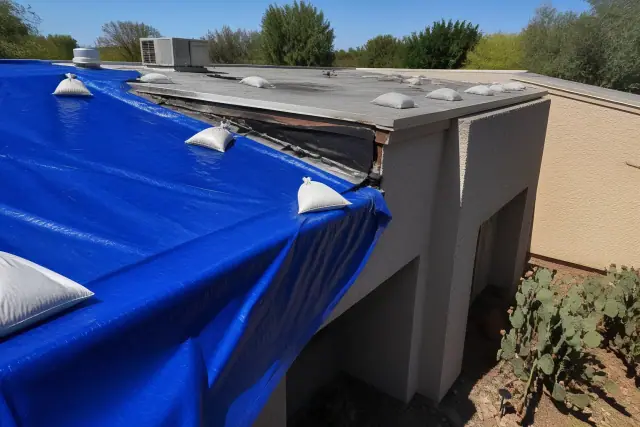
Heavy-duty tarp weighted by sandbags covering a damaged section of a residential roof in Tucson, AZ.

When wind-driven rain opens flashing at 9 p.m. on a Tuesday, stopping water intrusion comes first. We can tarp, seal, or temporarily patch the entry area, then schedule the permanent repair when the needed materials and safe conditions are available.

Request Estimate

Diagnostic Roof Inspections

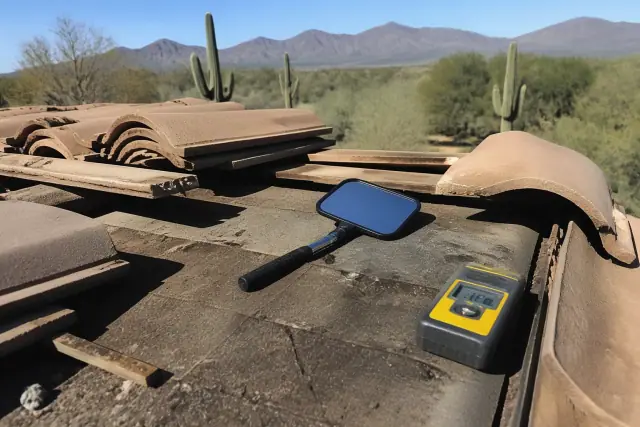
Contractor using a moisture meter to inspect roof underlayment with saguaro cacti in the background in Tucson, AZ.

We inspect the roof surface, attic, decking, flashing, penetrations, and ventilation rather than relying on a driveway view. Moisture meters, stain patterns, and physical inspection help distinguish the visible symptom from the actual leak source.

Request Estimate

Flashing, Penetration & Drainage Repairs

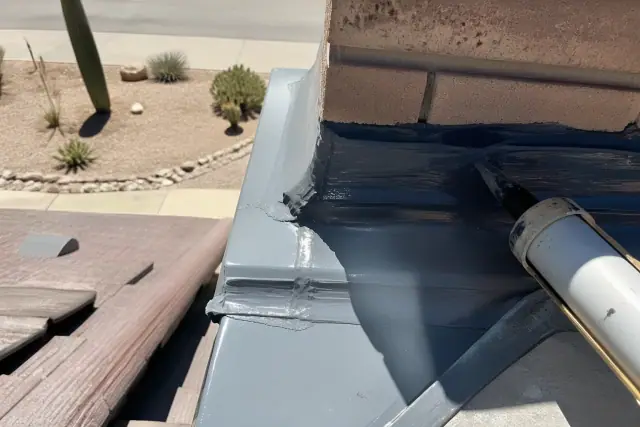
Contractor applying sealant to chimney flashing for roof repair in Tucson, AZ.

Failed chimney or parapet flashing, cracked pipe boots, lifted shingle tabs, gutters, soffits, fascia, drains, and scuppers can all contribute to water intrusion. We evaluate these connected details so a localized leak is not resealed while an adjacent failure remains.

Request Estimate

Storm Damage & Insurance Documentation

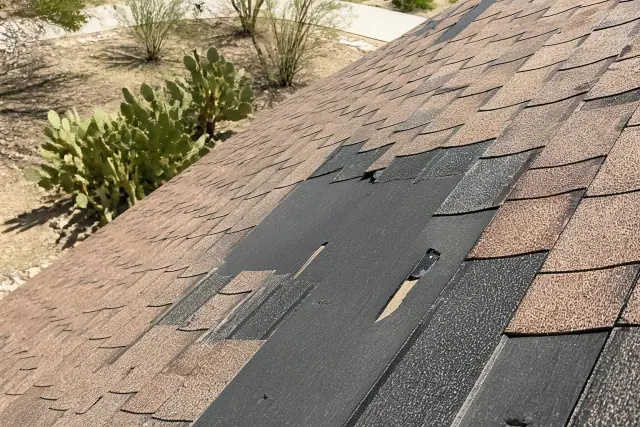
Close-up of storm-damaged roof shingles and exposed underlayment with prickly pear cactus in Tucson, AZ.

Straight-line winds, hail, and heavy monsoon rain can leave missing shingles, torn flashing, and damaged gutters or fascia. We document the roof with photographs, a written inspection report, and a repair estimate so the visible and structural scope can be presented during an insurance claim.

Request Estimate

Decking & Underlayment Repair

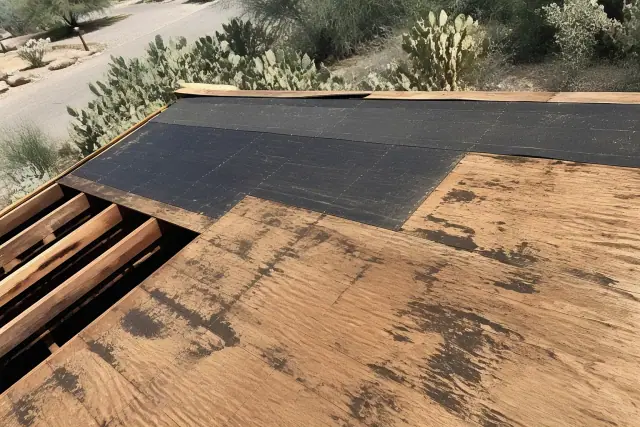
Exposed wood decking and felt underlayment during a roof repair project in Tucson, AZ.

Repairs may uncover rotted decking around older penetrations or worn felt or synthetic underlayment beneath tile. Decking replacement typically adds $2 to $5 per square foot to shingle work, and we identify and price that condition before proceeding.

Request Estimate

Roof Maintenance & Recoating

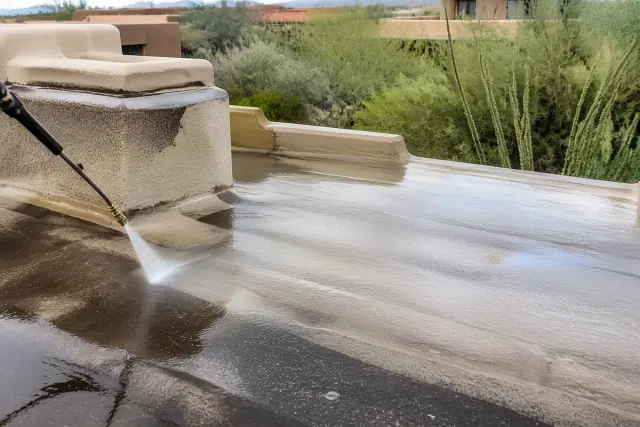
Pressure washing a weathered roof surface during maintenance in Tucson, AZ.

Routine inspections can catch blistering, cracking, punctures, and seam separation before they become active leaks. Built-up roofs, modified bitumen, membranes, coatings, and foam systems may benefit from maintenance or recoating matched to the existing material.

Request Estimate
Roofing System Options

Repairs for Tucson Roof Systems

Tile, flat, shingle, metal, membrane, coating, and foam roofs fail in different ways. Matching materials and methods to the original assembly helps avoid compatibility problems and unnecessary disturbance to sound areas.

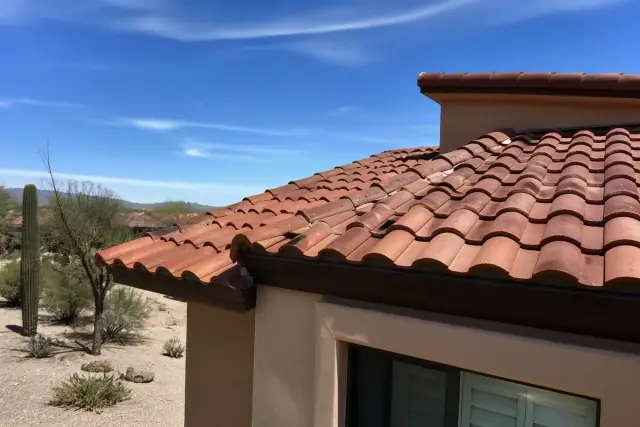
Completed clay tile roof repair with matching replacement tiles on a stucco home in Tucson, AZ.

Tile Roofing Systems

Clay and concrete tile roofs require careful access and material matching because the tile and the waterproofing underlayment have different service lives and repair needs.

  • Spanish, barrel, and flat tile profiles
  • Profile, color, and material matching for cracked or missing pieces
  • Clay and concrete tile kept separate because they are not interchangeable
  • Tile service life of about 30 to 50 years
  • Felt or synthetic underlayment that may need replacement around the 20 to 25-year mark
Request Estimate
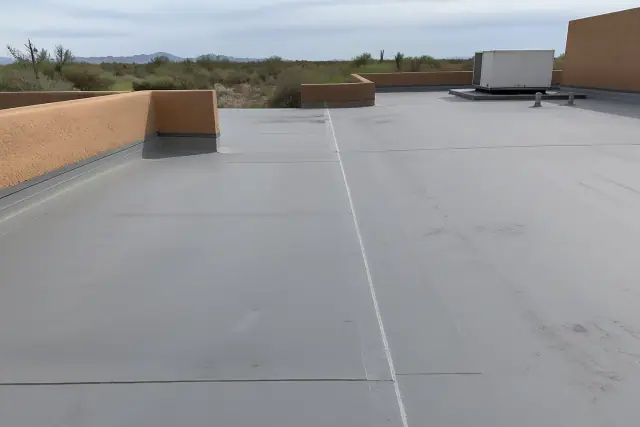
Heat-welded seam on a gray membrane roof with desert scrub and stucco parapet walls in Tucson, AZ.

Flat & Low-Slope Roofing

Flat and low-slope roofs on Tucson ranch homes, additions, and commercial buildings depend on intact membranes and reliable drainage.

  • Built-up roofing inspections and periodic recoating
  • Modified bitumen repairs using compatible torch-applied or cold-adhesive methods
  • Slope, drain, and scupper evaluation for ponding areas
  • Tapered insulation or added drainage when resealing alone will not correct standing water
  • Early attention to blistering, cracking, algae growth, and seam separation
Request Estimate
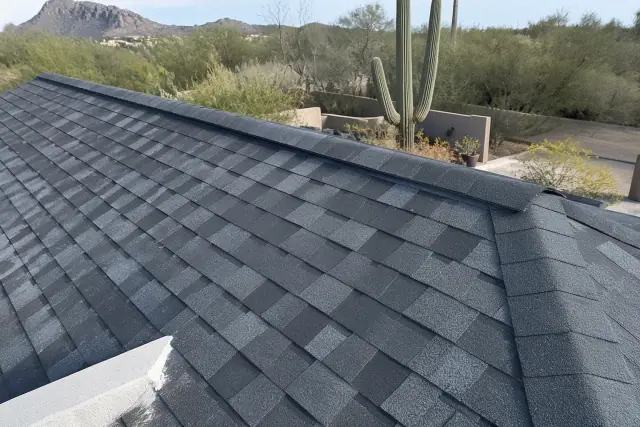
Completed asphalt shingle roof installation on a steep slope in Tucson, AZ with desert cacti in the background.

Asphalt Shingle Roofing

Asphalt shingles commonly last 15 to 25 years under normal conditions, although Tucson UV exposure can shorten that span.

  • Lifted or broken tabs caused by monsoon wind
  • Granule loss, curling, and cracking from sustained UV exposure
  • Seasonal hail bruising and accelerated wear
  • Penetration and flashing repairs around leak entry points
  • Damaged decking replacement when rot is found below the shingles
Request Estimate
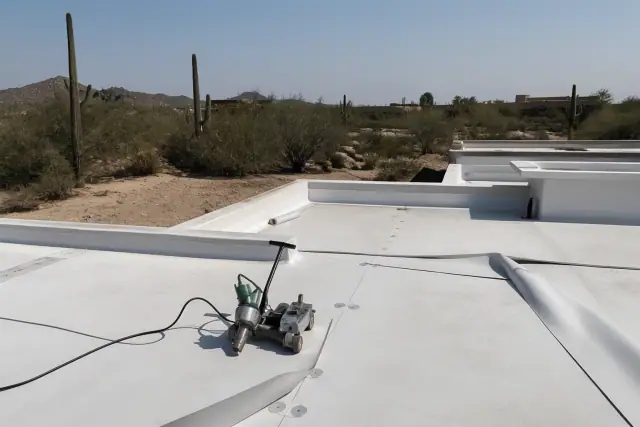
Heat-welded membrane roofing on a commercial building in Tucson, AZ with a hot-air welder and desert background.

Metal & Single-Ply Roofing

Standing-seam, corrugated metal, TPO, and EPDM systems are used on Tucson homes and commercial properties for durable, weather-resistant coverage.

  • Standing-seam and corrugated metal roofs with a 40 to 70-year lifespan
  • Reflective white TPO membrane for commercial flat roofs
  • TPO seam and puncture repairs after foot traffic or equipment work
  • EPDM seam separation and puncture maintenance
  • Repair methods matched to existing metal or single-ply materials
Request Estimate
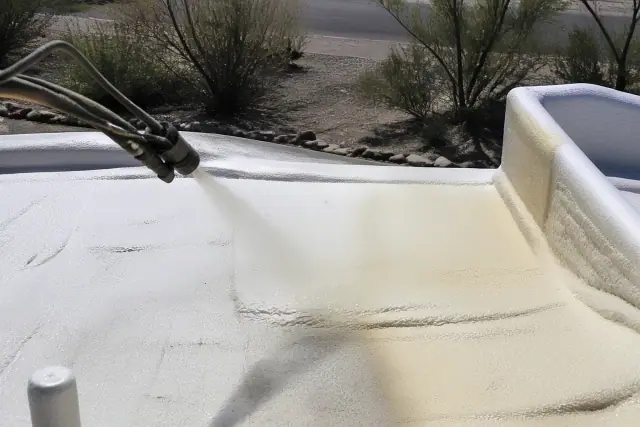
Polyurethane foam being sprayed onto a residential roof in Tucson, AZ.

Roof Coatings & Foam Roofing

Protective coatings and spray polyurethane foam can support flat and low-slope roofs when the existing assembly and maintenance needs make them appropriate.

  • UV-protective coatings that slow membrane cracking and blistering
  • Reflective cool-roof coatings that reduce heat transfer into the building
  • Elastomeric coatings that move with daily expansion and contraction
  • Fully adhered foam roofing with insulating value for warehouses and industrial properties
  • Properly coated and recoated foam systems that can perform well beyond two decades
Request Estimate
Finding the Right Repair

Choosing the Right Roof Repair Approach

The appropriate approach depends on roof material, age, damage location, drainage, decking condition, and how much of the roof is affected. Inspection findings determine whether a focused repair, a broader section repair, coating work, or replacement is the sounder path.

Licensed, Bonded & Insured

Tucson Quality Roofing performs repairs through roofers registered with the Arizona Registrar of Contractors and operates as a licensed, bonded, and fully insured contractor. That gives property owners verifiable accountability, along with permitting through the correct Tucson or Pima County jurisdiction.

Tucson Climate Experience

Tucson sits at roughly 2,400 feet elevation and receives over 350 days of sun a year. Roofs must also handle 100-plus-degree heat in June before monsoon downpours arrive in July, and our experience spans properties from Catalina Foothills and Barrio Viejo to Vail.

Cause-First Inspections

We trace leaks, check decking and ventilation, and inspect flashing and penetrations before recommending repairs. Technicians follow manufacturer installation specifications and NRCA-recommended practices so the chosen method fits the roofing system instead of covering the symptom.

What Sets Us Apart

Why Choose Us for Tucson Roof Repair?

A useful repair recommendation should explain what failed, what work is needed, and when broader replacement makes more sense. We provide written estimates, document storm damage, and match repair materials and methods to the existing roof.

Request a Free Roof Estimate

Hidden Roof Leaks

Water often enters far from the ceiling stain. Cracked pipe boots, lifted shingles, separated flashing, and attic condensation can redirect moisture before it becomes visible indoors, so tracing the path is essential.

Tile & Underlayment Failures

Cracked or displaced tile can expose vulnerable areas, but valleys, ridge caps, penetrations, and aging underlayment are often the real leak points. Walking the roof incorrectly can also break neighboring tile and expand the repair.

Flat-Roof Ponding

Water that remains on a flat roof for more than 48 hours accelerates membrane breakdown and can promote algae growth. The repair may require changes to slope, drains, scuppers, or tapered insulation rather than another surface seal.

UV & Wind-Damaged Shingles

Monsoon wind can lift or break shingle tabs, while long-term UV exposure causes granule loss, curling, and cracking. South-facing slopes often show these heat-related symptoms early, and seasonal hail can add bruising.

Membrane Blisters, Punctures & Open Seams

Built-up, modified bitumen, TPO, and EPDM roofs can develop blisters, cracks, punctures, or seam separation. Tucson roof surfaces regularly exceed 150 degrees in summer sun, making compatible materials and timely maintenance especially important.

Structural & Storm Damage

A sagging deck, damaged truss, exposed decking, or widespread storm impact needs a professional inspection before the repair scope is set. After severe weather, moisture problems and mold growth can develop within days as heat and humidity rise.

How It Works

Our Tucson Roof Repair Process

The process moves from inspection and source tracing to a documented recommendation, water control when needed, and a permanent repair matched to the existing roof.

01.

Inspect the Roof & Attic

We inspect the roof surface, flashing, penetrations, drainage, ventilation, attic moisture, and decking for soft spots. This creates a complete view of both visible damage and hidden conditions.

02.

Trace & Document the Damage

Moisture readings, stains, roof-surface findings, photographs, and measured damaged area help locate the entry point and define the scope. Storm-related findings are recorded in a written inspection report.

03.

Compare Repair & Replacement

We explain whether a targeted repair remains practical or whether wider damage changes the recommendation. When more than 25% of a roof section requires repair or re-covering within the defined scope, applicable code may require that section to be brought to current standards.

04.

Control Active Water

For an active leak, the immediate priority is stopping water intrusion with tarping, sealing, or temporary patching. Permanent work follows once the full damage is known and materials and conditions allow.

05.

Complete the Matched Repair

We use methods compatible with the existing tile, shingle, metal, membrane, coating, or foam assembly. Required permits are pulled through the appropriate jurisdiction, and related flashing, penetration, or drainage work is included when it is part of the failure.

06.

Review the Finished Work

We recheck the repaired area along with connected flashing, penetrations, and ventilation details. The owner receives the documented scope and guidance on any maintenance or future work identified during inspection.

Get Roof Repair Help

Schedule a Roof
Repair
Inspection

Request a free roof estimate for a leak, damaged tile or shingles, a flat-roof problem, storm damage, or commercial roof repair. We will inspect the system and explain the recommended scope before work begins.

Roof Repair Help

Tucson Roof Repair FAQs

These answers cover repair costs, timelines, warning signs, roofing materials, inspections, and repair-versus-replacement decisions for Tucson properties.

Call Our Roofers

The 25% rule refers to a code provision found in modified form in the International Residential Code and used by many Arizona jurisdictions. If more than 25% of a roof surface requires repair or re-covering within a defined scope, the entire affected section may need to be brought up to current code rather than patched piecemeal. We measure the damaged area during inspection before discussing repair or replacement.

Look for a licensed, bonded, and insured contractor registered with the Arizona Registrar of Contractors. A careful contractor should inspect the roof and attic, explain the cause of damage, account for permits, and provide a written estimate instead of relying on a rushed surface look.

Minor repairs typically run $200 to $800, while extensive or structural repairs often range from $1,000 to $3,000. Asphalt shingle labor generally costs $125 to $150 per hour plus materials, metal roof repairs often fall between $200 and $600, and damaged decking can add roughly $2 to $5 per square foot. The inspection and written estimate determine the property-specific total.

An active leak caught early often falls within the $200 to $800 minor-repair range when it is limited to a penetration, flashing point, or small material section. Costs can rise toward $1,000 to $3,000 if water has damaged decking or reached multiple roof areas. The duration and hidden path of the leak are major cost factors.

Full roof replacement generally ranges from $7,500 to $20,000, depending on roof size, pitch, material, and decking repairs. Disposal can add about $250 to $500 on larger jobs. Asphalt shingles tend to cost less upfront, while tile typically lasts 30 to 50 years and metal 40 to 70 years, compared with about 15 to 25 years for shingles under normal conditions.

For a significant repair or replacement, get at least two to three estimates and compare the inspection quality and itemized scope as well as price. A five-minute look that does not check the attic, decking, or failure point is a warning sign. A written scope makes bids easier to compare fairly.

Many minor flashing, shingle, or penetration repairs can be completed in a single day. Decking work, larger tile sections, or commercial membrane repairs may take two to four days depending on scope and weather. Active leaks are typically addressed the same day to control water, with permanent work scheduled after assessment.

Warning signs include ceiling stains, attic moisture, visible daylight through attic boards, missing or curling shingles, cracked or displaced tile, a sagging roofline, and granules collecting in gutters. Flat roofs may also show ponding, algae growth, blistering, cracking, or separated seams. An inspection can identify whether the symptom calls for repair or broader work.

Tile roof leaks often begin at valleys, ridge caps, flashing, or penetrations rather than through the field tile itself. The tile sheds weather, but the felt or synthetic underlayment below it is the primary waterproofing layer. Inspection should protect neighboring tile while checking both the transitions and underlayment.

Water that remains for more than 48 hours can accelerate membrane breakdown and encourage algae growth. The evaluation should consider slope, drain placement, scupper function, seams, and low areas. Tapered insulation or added drainage may be more effective than repeatedly resealing the surface.

The draft supports repairs for standing-seam and corrugated metal, TPO, EPDM, built-up roofing, modified bitumen, coatings, and spray polyurethane foam. Typical issues include seam failure, punctures, blisters, cracks, drainage problems, and damage around rooftop equipment. The repair method must be compatible with the existing system.

A compatible UV-protective or reflective coating can slow membrane degradation and lower surface heat transfer on suitable flat and low-slope roofs. Elastomeric coatings also expand and contract with temperature swings. Properly coated and recoated foam systems can perform well beyond two decades when maintained on schedule.

Address active water intrusion first, then arrange a professional inspection before filing a claim if you see widespread or structural damage. Photographs, a written inspection report, measured damage, and a detailed repair estimate help capture missing shingles, torn flashing, damaged gutters or fascia, sagging decking, and truss concerns. Prompt inspection also reduces the time exposed materials remain vulnerable to moisture.