Proudly serving Tucson, Oro Valley, Marana, Sahuarita, Green Valley, Vail & surrounding areasCall or Text 24/7: 520-569-2109

Roof Repair, Replacement & Leak Diagnostics for Vail, AZ Properties

Tucson Quality Roofing provides roof repair, roof replacement, and roof coating for homes and commercial properties in Vail, Arizona. Our full-service work also covers tile, flat, foam, shingle, and metal roofing systems. We trace leaks, correct damaged materials, and plan replacements around the roof's actual condition. Licensed, bonded, and insured crews work with the high-desert conditions found southeast of Tucson.

At roughly 3,100 feet in elevation, Vail roofs face intense UV exposure and wide day-to-night temperature swings. Monsoon storms from July through September can drive rain into failed flashing, shift tile, and lift shingle edges. Caliche soil and seasonal dust storms add to the harsh setting around local homes and buildings. A condition-based inspection helps separate a focused repair from a roof that has reached the point of replacement.

We serve Vail proper, Rocking K, Del Webb at Rancho del Lago, Cienega Creek, Sycamore Canyon, and properties near Colossal Cave Mountain Park and the Rincon Mountains District of Saguaro National Park. The area's growth from 2,484 residents in 2000 to 10,208 by the 2010 census has created a varied mix of tract homes, custom desert builds, older ranch properties, and commercial roofs.

★ ★ ★ ★ ★4.9/5 Average Rating - 20+ Years of Experience - Vail Roofing Contractor Specialists - Residential & Commercial
Roofing Services
Roofing Services for Vail, AZ

Choose the service that matches the roof system, failure point, and remaining material life rather than treating every problem as the same repair. Our Vail work covers residential and commercial roofs, while property owners planning work farther north can review service in Catalina Foothills, AZ .

Roof Repair

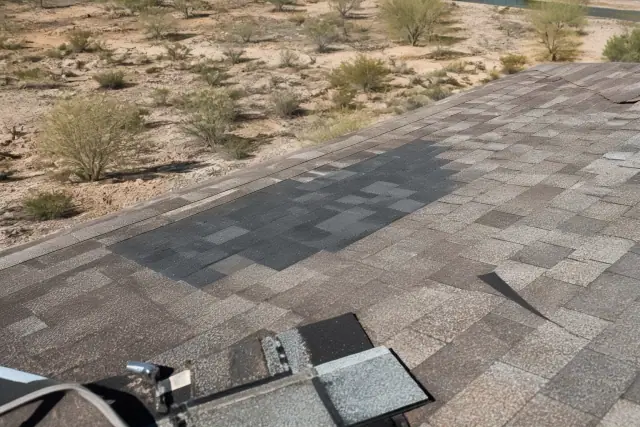
Fresh shingles being patched into an older roof during a repair project in Vail, AZ.

We diagnose cracked underlayment, lifted shingles, displaced tile, and isolated flashing failures before defining the repair. Typical single-family roof repairs in this region run from $395 to $1,966 depending on damage, material, and pitch.

Explore Service

Roof Replacement

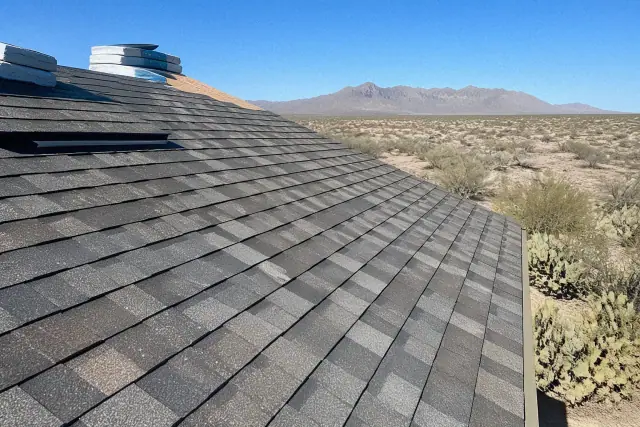
Technician installing shingles on a roof deck with a mountain view in Vail, AZ.

When repair no longer makes financial sense, we manage replacement from tear-off through final inspection and pull required permits through Pima County Development Services. National replacement averages range from $5,900 to $12,900, while asphalt shingle projects commonly range from $5,000 to $10,000; square footage, grade, and system choice shape the actual estimate.

Explore Service

Roof Coating

Pressure washer cleaning weathered roof shingles in the bright desert sunlight of Vail, AZ.

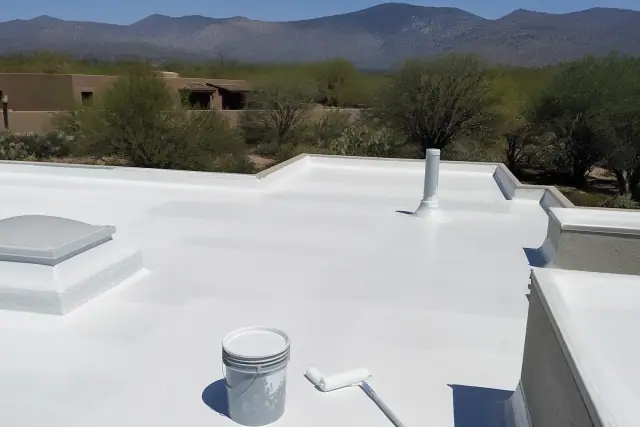
Elastomeric and acrylic roof coatings help extend membrane life and reflect heat from flat and low-slope roofs. The existing membrane, drainage, seams, and penetrations must be evaluated before coating is treated as the right restoration option.

Explore Service

Tile Roof Repair

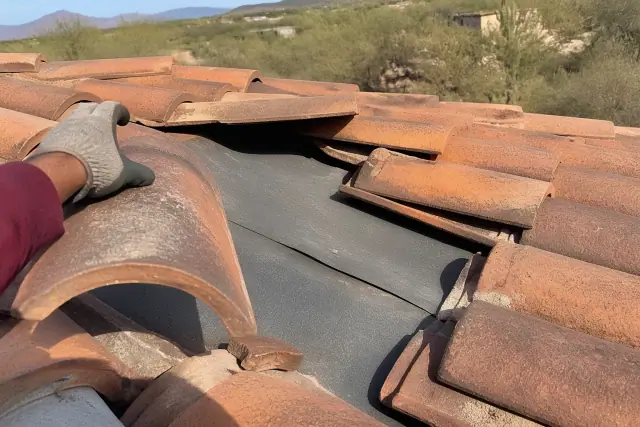
Roofer inspecting waterproof underlayment and clay tiles during a roof repair in Vail, AZ.

Clay and concrete tile can crack under foot traffic or hail impact, while monsoon gusts can shift individual pieces. We source matching profiles when possible and repair the underlayment beneath because tile and underlayment work together as a two-part waterproofing system.

Flat Roof Repair

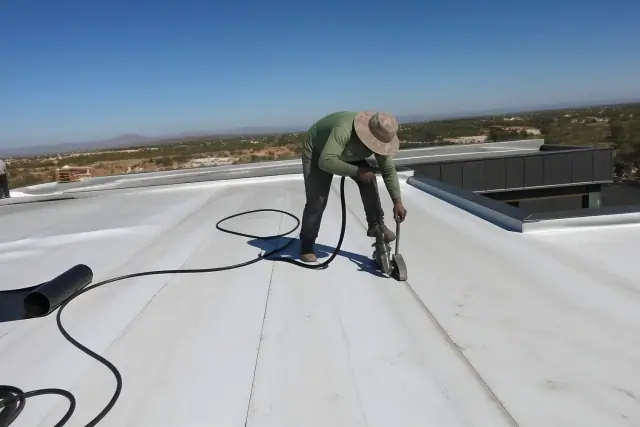
Heat-welded seams on a flat commercial roof membrane in Vail, AZ with desert mountains in the background.

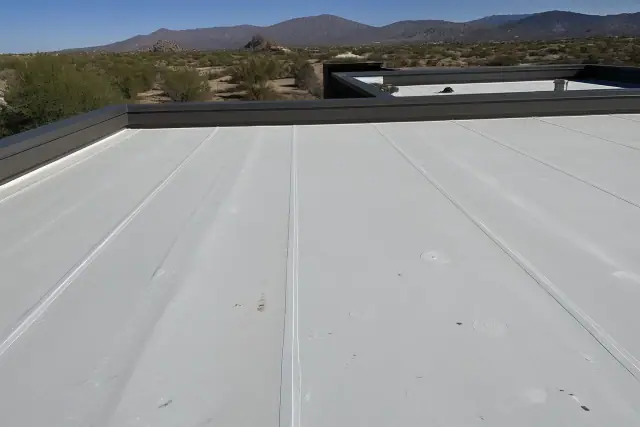
Flat and low-slope roof repair addresses ponding water, membrane seams, flashing, and damage from thermal cycling. We work with TPO, EPDM, modified bitumen, and built-up roofing used on Vail homes and commercial buildings.

Foam Roofing

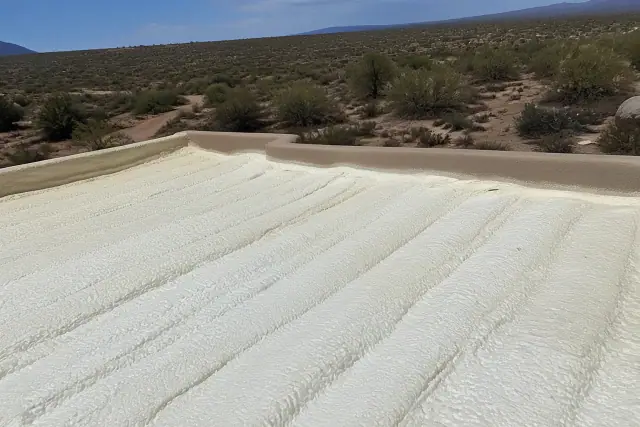
Freshly applied polyurethane foam insulation on a roof deck in Vail, AZ with desert terrain in the background.

Polyurethane foam creates a seamless, fully adhered surface for the flat and low-slope roofs common on ranch homes and commercial properties. Paired with a protective coating, it can provide a long-term restoration surface without seams for water to follow.

Shingle Roofing

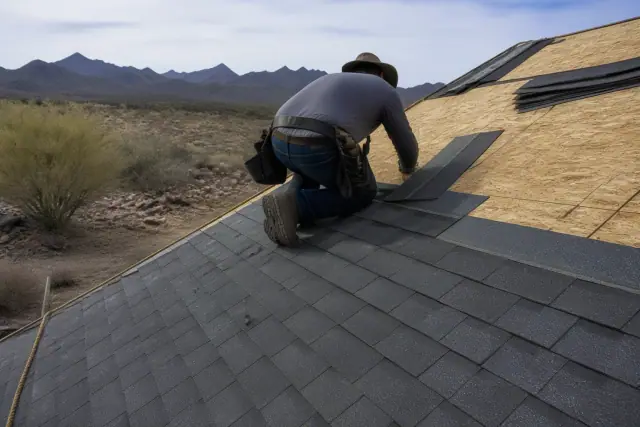
A technician installing shingles on a steep roof in Vail, AZ with desert landscape in the background.

Asphalt and composite shingles are common across Vail subdivisions. Asphalt shingles typically last 15 to 30 years, though strong UV exposure can shorten that range without ventilation and periodic maintenance; we repair granule loss, curling, and wind lift and install architectural systems for replacements.

Metal Roofing

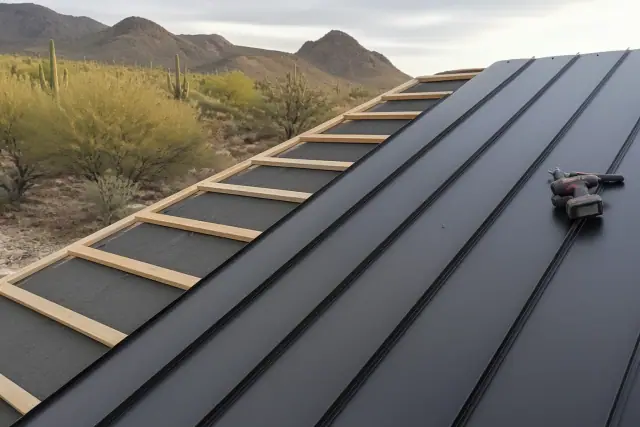
Worker installing standing seam metal roofing panels on a sloped roof frame in Vail, AZ.

Reflective metal roofs can offer up to 40% in annual energy savings compared with darker, less reflective materials. A metal system can last 40 to 50 years with minimal maintenance, making material choice and long-term ownership plans important parts of the decision.

Emergency Roof Leak Repair

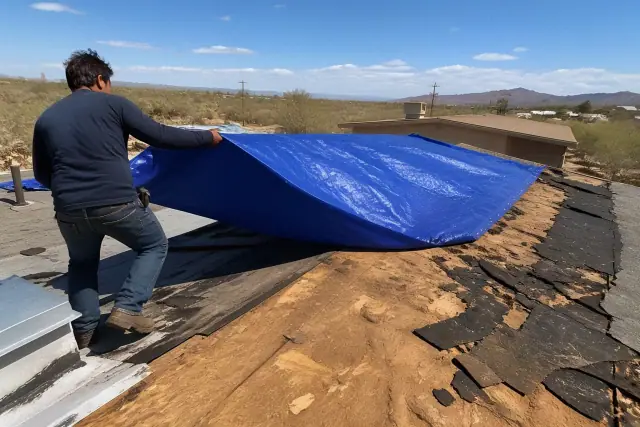
A worker unfurls a heavy-duty tarp over a damaged roof during repairs in Vail, AZ.

A monsoon leak can travel far from the visible ceiling stain. We use moisture meters and infrared leak detection to trace intrusion to the entry point, then seal the failure with materials matched to the existing roofing system.

Commercial Roofing

Contractor heat-welding a commercial roofing membrane on a building in Vail, AZ under a clear blue sky.

Retail centers, warehouses, and office buildings often use flat or low-slope systems that require different repair details than residential sloped roofs. We address ponding water, membrane seams, and flashing failures and schedule work around business hours to reduce operational disruption.

Service Selection

How to Choose the Right Roof Service in Vail

The right plan depends on the roof type, slope, material age, failure source, and current condition. An inspection should distinguish an isolated repair from widespread deterioration and account for permit scope, desert exposure, and the building's intended use. A written estimate then makes the materials, labor, and recommended scope clear before work begins.

Roof System and Slope

Tile, shingle, metal, foam, and membrane roofs fail in different ways. Matching the method to a steep, flat, or low-slope assembly keeps the repair focused on how that specific system sheds or controls water.

Damage and Remaining Life

A localized failure on a roof with useful life remaining may justify repair. Broad deterioration, repeated leaks, or worn materials can make replacement or restoration the more practical use of the project budget.

Leak Source Verification

The ceiling stain is not always directly below the opening. Moisture readings, infrared detection, and inspection of flashing, penetrations, valleys, and seams help locate the actual entry point before materials are removed.

Pima County Permit Scope

Vail roofing work falls under Pima County Development Services and adopted International Residential Code and International Building Code provisions. Under the general 25 percent rule, recovering or repair that affects more than 25 percent of the total roof area can require the affected section to meet current code rather than simply being patched over.

Desert Temperature Performance

Roofing surface temperatures in Vail regularly exceed 150 degrees Fahrenheit in summer before cooling rapidly overnight. Material compatibility, ventilation, reflective surfaces, and sound seam or flashing details all matter under that expansion-and-contraction cycle.

Written Cost and Scope

A useful estimate itemizes labor, materials, and scope so repair and replacement can be compared on the same basis. The recommendation should reflect roof age, condition, and remaining service life rather than defaulting to the largest project.

Vail Roofing Issues

Common Roof Problems for Vail Properties

Intense sunlight, wind, dust, hail, short bursts of monsoon rain, and sharp temperature changes expose weak points in every roof type. Early inspection is especially useful when a stain, shifted material, ponding water, or surface wear appears before the next storm cycle.

Request Free Roof Inspection

Cracked Underlayment

The waterproof layer beneath tile can become brittle or split even when much of the visible tile still looks sound. Repair must address that concealed layer instead of replacing only the surface piece above it.

Wind-Lifted Shingles

Monsoon gusts and dust-storm winds can loosen tabs and lift shingle edges. Curling, missing granules, or movement along a roof plane can signal that fastening and surrounding material need evaluation.

Displaced or Cracked Tile

Clay and concrete tile can shift in strong wind or crack from hail and foot traffic. A repair should check the underlayment below and match the profile when replacement tile is available.

Ponding Water

Water that remains on a flat or low-slope roof can stress coatings, membranes, seams, and drainage details. The solution depends on whether the issue begins with drainage, surface condition, or a localized membrane failure.

Flashing Failures

Failed details around vents, skylights, chimneys, and roof transitions account for many leak calls. Water may follow the deck before appearing indoors, so the repair should trace the route instead of sealing only the ceiling-stain area.

UV and Thermal Cycling

Intense UV exposure degrades surfaces while daytime heat and overnight cooling repeatedly expand and contract materials. Over time, shingles fatigue, tile cracks, and membrane seams or coatings lose flexibility.

Why Choose Us

Why Choose Tucson Quality Roofing in Vail?

Local roofing decisions should be grounded in the roof's condition, the desert setting, and the rules that apply to the project. Tucson Quality Roofing combines Arizona credentials with documented inspections, clear estimates, system-specific installation methods, and a final quality check.

Licensed, Bonded & Insured

We operate as a licensed Arizona roofer registered with the Arizona Registrar of Contractors and carry general liability insurance. Our bonded and insured status helps protect both the crew and the property during roofing work.

Inspection-Led Recommendations

We inspect accessible roof surfaces and document flashing, penetrations, valleys, and material condition with photos. On steep tile roofs, ground and attic observations help reduce unnecessary foot traffic and tile breakage.

Manufacturer-Specified Work

Crews follow manufacturer installation specifications and applicable ASTM material standards, including underlayment fastening, flashing details, and coating mil thickness where relevant. Completed work receives a final walkthrough, and applicable manufacturer material warranties are explained before sign-off.

Simple Process

Our Roof Repair Process in Vail

Each project begins with the roof rather than a preset sales recommendation. We document the condition, assess repair against replacement, define materials and labor in writing, complete the system-specific work, and finish with a quality walkthrough.

01.

Free Roof Inspection

We examine the surface when safe and check flashing, penetrations, valleys, drainage, seams, and visible material wear. Steep tile roofs can also be reviewed from the ground and attic to limit avoidable breakage.

02.

Photo Documentation

Photos record the observed condition and make hidden or hard-to-reach details easier to discuss. Moisture meters and infrared detection may be used when the path of water intrusion is not visible from the surface.

03.

Repair-or-Replace Assessment

We compare the failure area with the roof's age, material condition, and remaining useful life. The assessment also considers permit thresholds and whether a coating, targeted repair, restoration, or replacement fits the existing system.

04.

Written Estimate

The written estimate itemizes the planned materials, labor, and scope before work starts. We explain why the recommendation favors repair or replacement so the decision is tied to roof condition rather than invoice size.

05.

Professional Roofing Work

Crews use methods matched to the roof material and follow manufacturer specifications and applicable ASTM standards. Details around underlayment, membrane seams, coatings, vents, skylights, and chimneys are completed as the selected system requires.

06.

Final Walkthrough

A final walkthrough and quality check close the job. We review the completed scope and explain workmanship coverage and any manufacturer material warranty that applies before final sign-off.

Roofing Priorities

Roofing Priorities for Vail Homes & Businesses

Case Study 1: Sloped-roof focus: Check shingle lift, tile displacement, underlayment condition, valleys, and flashing after wind, hail, or monsoon rain.

Case Study 2: Low-slope focus: Evaluate ponding water, seams, drainage, penetrations, and coating condition on TPO, EPDM, modified bitumen, built-up, or foam roofing.

Case Study 3: Long-term planning: Compare targeted repair, coating, restoration, and replacement against material age, desert exposure, permit scope, and the property's expected use.

Plan Your Roof Work

Schedule a
Roof
Inspection

Request an inspection for a leak, damaged material, maintenance concern, or replacement decision in Vail. We will evaluate the existing system and prepare a written scope based on what the roof actually needs.

Vail Roofing Help

FAQs About Roofing in Vail, AZ

These answers cover the roof systems, climate issues, inspections, costs, permits, and repair decisions described for Vail properties. A physical inspection is still needed to define the condition and scope of a specific roof.

Call Our Roofers

Common issues include cracked underlayment, tile displacement, lifted shingles, membrane seam failure, ponding water, and failed flashing. Intense UV, dust, wind, hail, monsoon rain, and wide temperature swings can accelerate those problems.

The decision depends on the failure area, roof age, material condition, prior leaks, and remaining service life. A localized problem may support repair, while broad deterioration or repeated failures can make restoration or replacement more practical.

Typical single-family roof repairs in this region range from $395 to $1,966. The extent of damage, roofing material, roof pitch, and access determine where a specific job falls within or outside that range.

National roof replacement averages run from $5,900 to $12,900, while asphalt shingle projects typically range from $5,000 to $10,000. Square footage, material grade, roof complexity, and system type affect the written estimate, and tile or foam systems common in southern Arizona may cost more because of material and labor demands.

Asphalt shingles typically last 15 to 30 years. Vail's elevation and UV exposure can shorten that lifespan when ventilation and periodic maintenance are inadequate.

Metal roofing can suit homeowners who value reflective performance and a longer service life. Reflective systems can offer up to 40% in annual energy savings compared with darker materials, and metal roofs can last 40 to 50 years with minimal maintenance.

Our flat and low-slope work includes TPO, EPDM, modified bitumen, built-up roofing, spray polyurethane foam, and elastomeric or acrylic coatings. The existing membrane, seams, drainage, ponding, penetrations, and thermal movement determine the suitable repair or restoration method.

Clay or concrete tile is the visible top layer, but the underlayment beneath it is part of the waterproofing assembly. Replacing a cracked or displaced tile without checking that concealed layer can leave the actual leak path unresolved.

We inspect flashing, penetrations, valleys, seams, material condition, and the route water may have followed across the deck. Moisture meters and infrared leak detection can help trace intrusion when the opening is not directly above the visible ceiling stain.

Roofing surface temperatures in Vail regularly exceed 150 degrees Fahrenheit before cooling rapidly overnight. That thermal cycling fatigues shingles, cracks tile, and stresses membrane seams, so material compatibility, ventilation, coatings, and flashing details matter.

The local monsoon season runs from July through September and can bring short, intense rainfall, hail, and strong wind. Those conditions quickly expose weak flashing, aging seams, loose tile, and lifted shingle edges, which is why spring and fall are useful windows for proactive maintenance.

Roofing work in Vail falls under Pima County Development Services and adopted residential and building code provisions. The permit and code scope depends on the work, and under the general 25 percent rule, work affecting more than 25 percent of the total roof area can require the affected section to meet current code.

We inspect the surface when safe and document flashing, penetrations, valleys, drainage, seams, and material condition with photos. Steep tile roofs can be assessed from the ground and attic space when walking the surface would risk unnecessary breakage.

The written estimate itemizes materials, labor, and scope before work begins. It also explains the repair-versus-replacement recommendation in relation to roof age, material condition, and remaining service life.

Yes. We work on flat and low-slope systems used by Vail retail centers, warehouses, and office buildings, addressing ponding water, membrane seams, coatings, and flashing failures while scheduling around business hours to reduce disruption.