Proudly serving Tucson, Oro Valley, Marana, Sahuarita, Green Valley, Vail & surrounding areasCall or Text 24/7: 520-569-2109

Flat Roof Repair and Membrane Troubleshooting in Tucson, AZ

Tucson Quality Roofing provides flat roof repair for residential and commercial properties throughout Tucson and the metro area. We repair TPO, EPDM, modified bitumen, built-up roofing, and spray polyurethane foam systems. Our broader roofing work includes roof replacement, roof coating, tile, shingle, metal, emergency leak repair, and commercial roofing.

Triple-digit heat, intense UV exposure, and monsoon storms from July through September put unusual stress on Tucson's low-slope roofs. Our team inspects the full membrane, drainage, flashing, penetrations, and insulation before recommending a repair. We are licensed, bonded, and insured, and every job begins with a physical inspection and written scope.

Technicians use manufacturer-approved installation methods and National Roofing Contractors Association guidance for membrane seams, flashing details, and drainage design.

Tucson Quality Roofing provides flat roof repair throughout Tucson, Oro Valley, Marana, Sahuarita, and greater Pima County.

★ ★ ★ ★ ★4.9/5 Average Rating · 20+ Years of Experience · Thousands of Customers Helped · Licensed & Insured · Residential & Commercial

Tucson Flat Roof Repair Options & Benefits

What Does Flat Roof Repair Include?

Flat roof repair starts by locating the real entry point, checking the membrane and seams, and evaluating drains, flashing, and penetrations. The inspection also checks for saturated insulation because the visible ceiling stain may be far from the roof opening.

The repair method must match the existing roof. Depending on the system and damage, that may mean mechanical patching, hot-air welding, EPDM seam tape and adhesive, modified bitumen patching, liquid-applied elastomeric repair, or a foam roofing overlay.

For an active leak, temporary protection can stop water intrusion until conditions allow the permanent repair to bond and cure correctly. Afterward, the repair area and drainage flow are checked, with a water test when conditions allow.

Benefits of a Material-Specific Repair

A focused repair addresses the membrane, seam, flashing, drainage, or insulation condition causing the problem without defaulting to full replacement. The result is a scope built around the existing assembly and the damage actually found.

  • Stops active water intrusion before interior damage spreads
  • Targets hidden moisture instead of patching only the visible ceiling stain
  • Restores seams with membrane-appropriate adhesives or hot-air welding
  • Rebuilds flashing around pipe boots, HVAC curbs, and parapet walls
  • Clears scuppers and drains obstructed by caliche dust or mesquite debris
  • Uses temporary protection when weather prevents a permanent bond
  • Preserves serviceable roof areas through targeted patching or coating
  • Verifies drainage and explains what to monitor after the repair
Flat Roof Repair Services

Flat Roof Repair Services

Tucson Quality Roofing handles active leaks, isolated membrane damage, failed flashing, drainage trouble, and protective restoration on residential and commercial flat roofs. Each recommendation follows the roof system, moisture findings, and conditions at the property.

Active Leak Detection

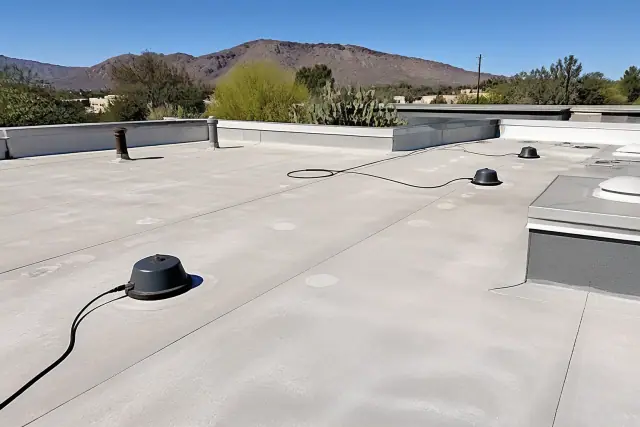
Moisture scanning sensors on a commercial flat membrane roof in Tucson, AZ, with desert cacti in the background.

Active leak calls are prioritized, with the goal of getting a technician on-site the same day. Moisture-sensing tools, a full membrane walk, and checks at drain bowls, pitch pockets, seams, and flashing help locate the source rather than relying on the ceiling stain alone.

Request Estimate

Temporary Emergency Protection

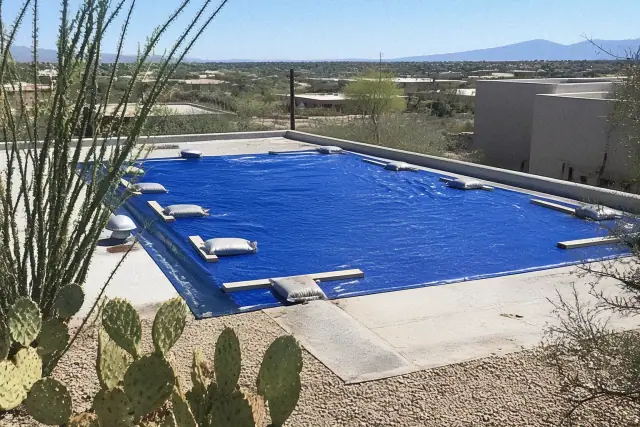
Temporary emergency tarp secured with sandbags and wood battens on a damaged flat roof in Tucson, AZ.

For situations that cannot wait until morning, 24/7 emergency roof leak repair is available for residential and commercial properties. A temporary patch or tarp can stop active leaking during monsoon conditions, followed by the permanent repair when the membrane can bond and cure correctly.

Request Estimate

Seam and Puncture Repair

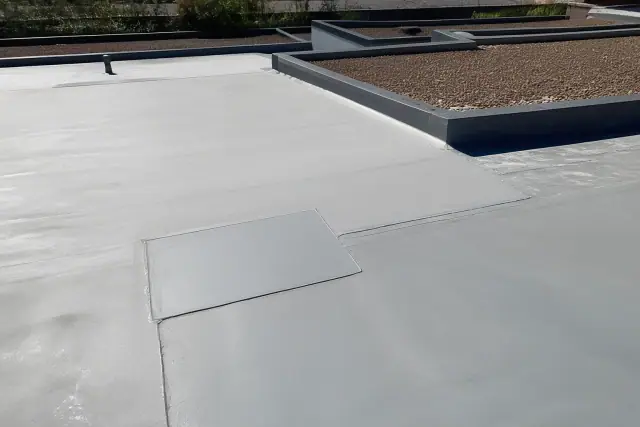
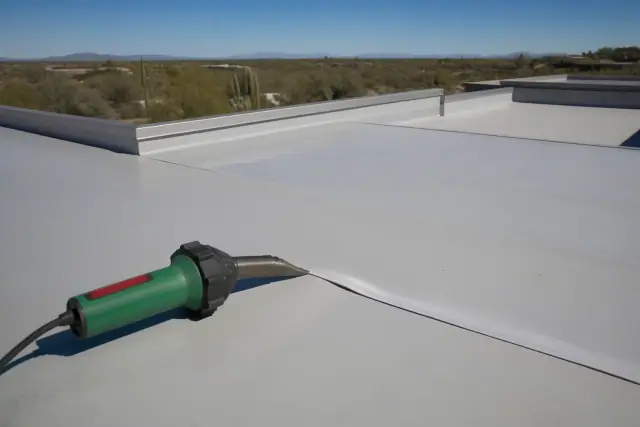
Heat-welded flat roof seam repair on a commercial building rooftop in Tucson, AZ.

HVAC traffic, satellite dish work, and monsoon hail can puncture a membrane or open a seam. Repairs use the correct patch material, welding equipment, tape, adhesive, primer, lap width, and cure time for the existing roof system.

Request Estimate

Flashing and Penetration Repair

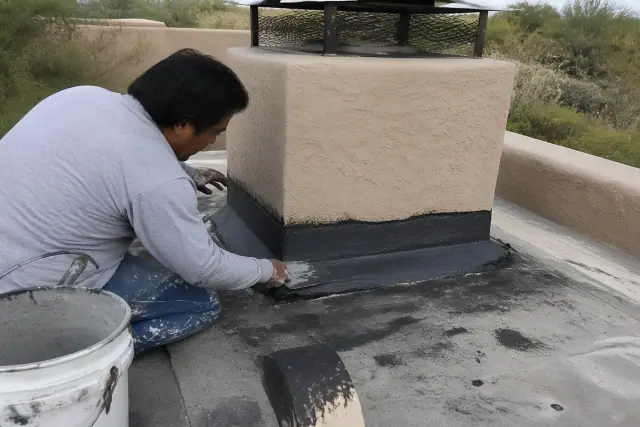
Technician applying sealant to chimney flashing on a flat roof in Tucson, AZ.

Pipe boots, HVAC curbs, parapet walls, pitch pockets, and other penetrations are frequent leak points. The surrounding seals and flashing details are inspected and rebuilt with compatible components where failure is found.

Request Estimate

Ponding Water and Drainage Repair

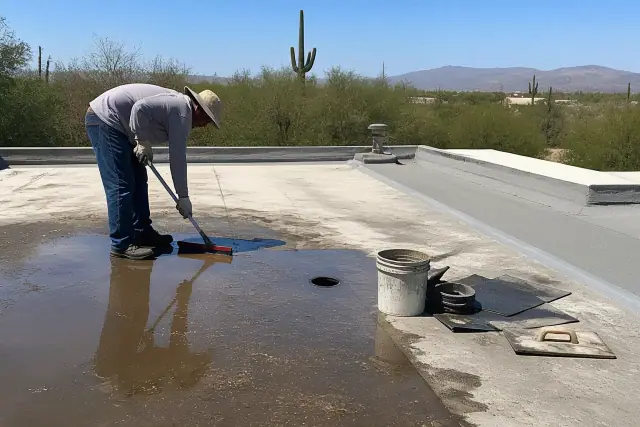
Flat roof drainage repair with standing water removal in Tucson, AZ, featuring desert landscape in the background.

Low spots, settling, poor original slope, and obstructed scuppers or drains can leave water standing on a flat roof. The repair assessment identifies the drainage restriction and checks the roof deck and membrane for damage caused by the added load and prolonged moisture.

Request Estimate

Roof Coating and Foam Overlays

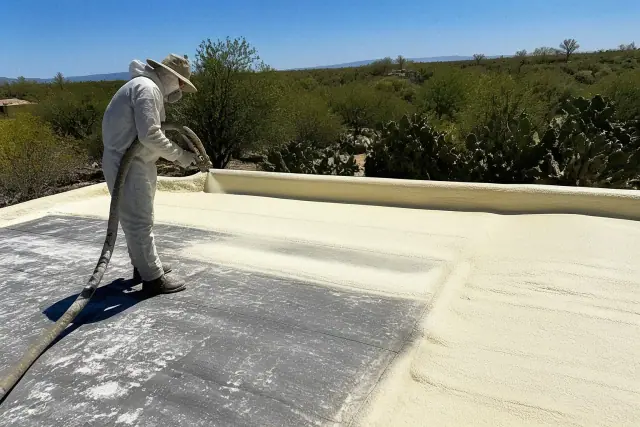
Contractor applying polyurethane foam insulation to a flat roof in Tucson, AZ, with desert cacti in the background.

Elastomeric coating or a spray polyurethane foam overlay may protect an aging, compatible flat roof without a full tear-off. These reflective options slow UV deterioration, and periodic recoating can extend the system's service life.

Request Estimate
Material-Specific Repair

Flat Roof Materials

TPO, EPDM, modified bitumen, built-up roofing, and spray polyurethane foam require different preparation, patch materials, and bonding methods. Identifying the existing assembly comes before selecting a repair.

Heat-welded TPO roof membrane seam repair on a commercial building rooftop in Tucson, AZ.

TPO Roof Repair

TPO is common on newer residential and commercial flat roofs, and its reflective white surface helps with Tucson cooling loads. Correct repairs hot-air weld compatible membrane material to restore the seam or damaged area.

  • Reflective white membrane surface
  • Hot-air welded seam repairs
  • Manufacturer-specified lap widths
  • Seam and flashing inspection
  • Residential and commercial applications
Request Estimate
Heat-welded EPDM roof repair on a commercial building in Tucson, AZ with prickly pear cacti in the desert landscape.

EPDM Roof Repair

EPDM rubber membranes respond well to specialized seam tape and liquid adhesive repairs. Careful cleaning is essential because Tucson UV exposure can leave a chalky residue that interferes with bonding.

  • Rubber membrane assessment
  • Cleaning of UV chalk residue
  • Specialized seam tape
  • Liquid adhesive repairs
  • Careful surface preparation
Request Estimate
Modified bitumen roof repair with heat-welded seams on a commercial building rooftop in Tucson, AZ.

Modified Bitumen Roof Repair

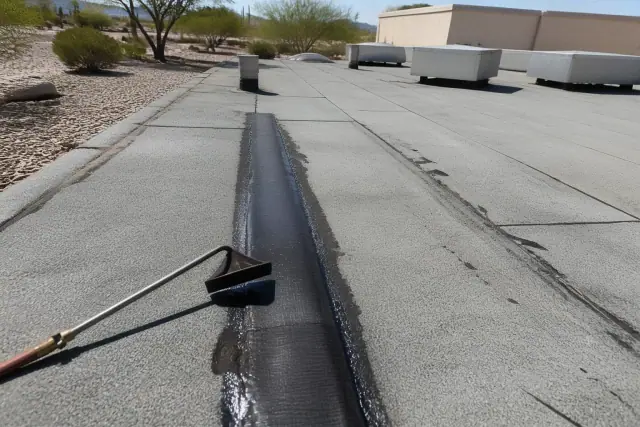
Modified bitumen appears on many older Tucson homes and small commercial buildings. Repairs use torch-applied or cold-adhesive patches matched to the existing ply configuration, with the correct overlap for long-term performance.

  • Torch-applied patch option
  • Cold-adhesive patch option
  • Existing ply configuration matched
  • Correct lap overlap
  • Older residential and small commercial roofs
Request Estimate
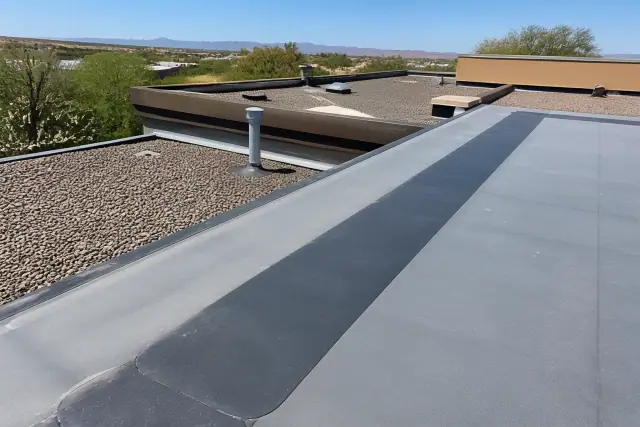
Partially patched flat roof seam with a heat-trowel on a commercial building in Tucson, AZ.

Built-Up Roof Repair

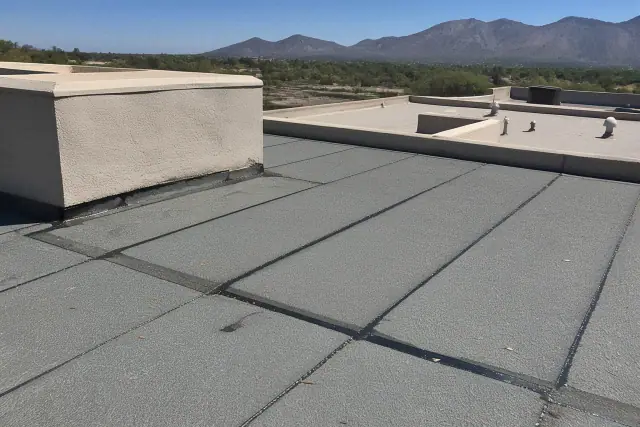
Built-up roofing is the layered gravel-and-tar assembly still found on older Tucson warehouses and office buildings. Patch work matches the existing ply layers and restores gravel ballast so the repaired area fits the original assembly.

  • Layered gravel-and-tar assembly
  • Existing ply layers matched
  • Gravel ballast restored
  • Older warehouse and office roofs
  • Saturated insulation assessment
Request Estimate
Polyurethane foam being sprayed onto a flat roof in Tucson, AZ with desert vegetation in the background.

Spray Polyurethane Foam Roofing

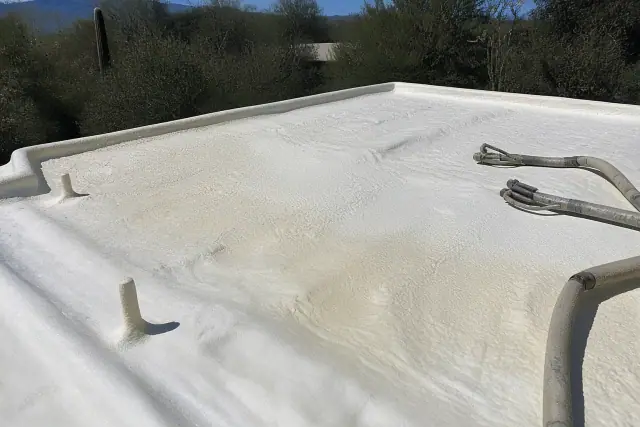
Spray polyurethane foam can be applied over many existing flat-roof substrates to add insulation value and form a seamless, monolithic waterproof surface. It reflects solar heat and can be periodically recoated to extend service life for decades without a full tear-off.

  • Installed over many existing substrates
  • Seamless, monolithic waterproof surface
  • Added insulation value
  • Solar-heat reflection
  • Periodic recoating for extended service life
Request Estimate
Finding Your Right Fit

Choosing the Right Repair Approach

The right approach depends on membrane type, damage extent, accessibility, drainage, deck condition, and whether insulation is saturated. A physical inspection separates an isolated patch, flashing repair, coating, foam overlay, or larger deck repair from a one-size-fits-all recommendation.

Material-Matched Repairs

TPO may need hot-air welding, EPDM depends on clean surfaces with specialized tape or adhesive, and modified bitumen requires a compatible ply and overlap. Matching the repair to the membrane helps avoid the weak bonds that lead to repeat leaks.

Documented Inspection and Scope

Every job begins with a physical inspection, photos of existing damage, and a written scope before repair work starts. The estimate breaks down labor and material costs so membrane type, deck condition, access, and flashing work are clear.

Tucson Climate Experience

Local repair decisions account for intense UV, limited rainfall interrupted by heavy monsoon bursts, and wide temperature swings between summer and winter. Experience across residential, apartment, shopping center, and industrial roofs helps the team recognize how those stresses affect different membranes.

What Sets Us Apart

Why Choose Us for Flat Roof Repair?

Tucson Quality Roofing holds current Arizona Registrar of Contractors licensing and is bonded and insured. Technicians follow manufacturer-approved installation methods and National Roofing Contractors Association guidance, while work within Tucson and unincorporated Pima County is approached with the applicable local requirements in mind.

Request Written Estimate

Ponding Water and Clogged Drainage

Ponding water that remains for more than 48 hours accelerates membrane breakdown and adds dead-load weight to the deck. Low spots from settling or improper slope, plus scuppers and drains clogged by caliche dust or mesquite debris, are common contributors.

UV Cracking and Blistering

Unprotected membrane surfaces can lose flexibility, crack, or blister under Tucson's intense UV exposure. During peak summer heat, roof surface temperatures can exceed 150 degrees, making protective coatings and timely maintenance especially important.

Membrane Punctures and Open Seams

HVAC service traffic, satellite dish installation, and monsoon hail can puncture membranes or disturb seams. Once water gets below the surface, it may travel laterally and appear indoors far from the entry point.

Failed Flashing and Penetration Seals

Pipe boots, HVAC curbs, parapet wall flashing, pitch pockets, and drain bowls concentrate changes in material and movement. Cracked, lifted, or separated seals at these details account for a large share of flat-roof leaks.

Saturated Insulation and Deck Damage

Water can travel many feet along the roof deck before it reaches a ceiling. Moisture mapping helps find saturated insulation early, before a small $300 patch develops into a $2,000 deck repair because wet material was left in place.

Monsoon and Temperature Stress

Heavy monsoon bursts follow months of heat and UV exposure, challenging brittle membranes and aging seals. Fall preparation addresses summer storm damage, while spring inspection clears debris and checks seals before the next period of peak heat.

How it works

Our Flat Roof Repair Process

The process moves from inspection and diagnosis to a material-specific repair, final verification, and a clear explanation of the work. Photos and a written scope establish what was found before repair begins.

01.

Inspect the Entire Roof

A technician walks the full membrane and checks drains, seams, flashing, and penetrations instead of looking only near the indoor stain. Existing damage is documented with photos.

02.

Trace Water and Moisture

Water paths are traced along the deck, and moisture-sensing tools identify saturated insulation below areas that may still look intact. This separates the visible symptom from the actual source.

03.

Select the Repair Method

The membrane type and extent of damage determine whether the scope uses mechanical patching, heat-welded seams, liquid-applied elastomeric repair, modified bitumen work, or a foam overlay. The selection is included in the written scope.

04.

Prepare the Surface

The repair area is cleaned and prepared for its material, including removal of chalky residue where it could prevent adhesion. Compatible primer, patch material, flashing components, and equipment are staged before bonding begins.

05.

Complete the Repair

Patches, seams, or flashing are installed to the manufacturer's requirements for lap width, primer application, and cure time. Wet insulation or damaged decking identified in the scope is addressed rather than sealed beneath the patch.

06.

Test and Explain

The repaired area is inspected and drainage is confirmed with a water test where conditions allow. The customer receives a straightforward explanation of what was completed and what signs to watch for going forward.

Get Clear Repair Options

Schedule a Flat Roof Repair Inspection

Request an inspection for an active leak, ponding water, damaged flashing, membrane deterioration, or a written repair estimate. Tucson Quality Roofing will assess the existing system and explain the recommended scope before work begins.

Flat Roof Repair Help

Flat Roof Repair FAQs

These answers cover repair timing, costs, materials, insurance, maintenance, inspections, and common warning signs for Tucson flat roofs.

Call Our Roofing Team

Most seam patches, flashing repairs, and small puncture fixes take between two and six hours, depending on damage and access. Larger work involving deck replacement or extensive membrane sections can take one to two full days, while an emergency temporary patch is typically completed within a few hours of arrival. The inspection accounts for material-specific cure time before providing a schedule.

A well-installed and properly maintained Tucson-area flat roof typically lasts 15 to 25 years, depending on the material. Foam and TPO systems with regular recoating can reach the higher end, while older built-up or modified bitumen roofs without maintenance may need attention closer to 10 to 15 years. Intense UV exposure makes protective maintenance important.

A proper repair requires identifying the membrane, then matching the primer, adhesive or welding equipment, patch material, and flashing components. The team carries TPO welding equipment, EPDM seam tape and adhesives, modified bitumen torch equipment, elastomeric coating materials, and moisture-detection tools. The exact combination follows the roof system and damage found.

Typical Tucson flat roof repairs run from roughly $300 to $1,500, based on damage extent, membrane type, and accessibility; emergency after-hours work can cost 20 to 30 percent more because of response time and material availability. Full flat roof replacement generally ranges from $6,000 to $22,500 for a 1,500-square-foot roof, or about $4 to $15 per square foot installed depending on material. A written estimate provides the labor and material breakdown before work begins.

Property insurance often covers damage caused by a covered peril such as wind, hail, or fire, minus the policy deductible, while normal wear or neglected maintenance typically is not covered. Tucson Quality Roofing can provide photos and written condition documentation and work with an adjuster on the repair scope. Coverage ultimately depends on the terms of the specific policy.

Watch for ceiling stains, ponding water lasting more than two days after rain, membrane bubbles or blisters, and cracked or lifted flashing around vents and HVAC units. Musty odors or visible deck sagging can point to more advanced moisture damage. Prompt inspection helps identify whether the issue is isolated or has reached insulation and decking.

Spray polyurethane foam can be installed over many existing flat-roof substrates to add insulation value and create a seamless waterproof surface. Its reflective surface helps with Tucson heat, and periodic recoating can extend service life without a full tear-off. An inspection determines whether the existing substrate is a suitable candidate.

Water paths are traced along the deck because moisture can travel laterally beneath an intact-looking membrane. The inspection checks seams, flashing, drain bowls, pitch pockets, and penetrations across the roof field. Moisture-sensing tools help locate saturated insulation and narrow the source.

Tucson Quality Roofing repairs TPO, EPDM, modified bitumen, built-up roofing, and spray polyurethane foam systems. Each material needs a different preparation and bonding method, from hot-air welding for TPO to specialized tape and adhesive for EPDM. The inspection confirms the assembly before the repair is selected.

A temporary patch or tarp is used when active water intrusion must be stopped but weather or surface conditions will not allow the permanent membrane repair to bond correctly. Active leak calls are prioritized for same-day response, and 24/7 service is available for situations that cannot wait until morning. The permanent repair is scheduled when the material can be installed and cured properly.

Recoating is commonly recommended every 5 to 10 years to protect the underlying membrane, although the right interval depends on the existing material and its condition. Seasonal inspections can identify cracking, blistering, or coating wear before the next monsoon. The roof should be evaluated before a coating schedule is set.

Water remaining for more than 48 hours should be investigated because it accelerates membrane deterioration and adds weight to the roof deck. Low spots, settling, improper slope, or drains blocked by caliche dust and mesquite debris may be involved. The inspection checks drainage flow along with the surrounding membrane and deck.

The technician walks the entire membrane and checks drains, flashing, penetrations, seams, and visible deck conditions. Damage is documented with photos, water paths are traced, and insulation is checked for saturation. The findings are used to prepare a written scope and estimate before repair work begins.