Proudly serving Tucson, Oro Valley, Marana, Sahuarita, Green Valley, Vail & surrounding areasCall or Text 24/7: 520-569-2109

Roof Repair and Maintenance for Green Valley, AZ Residential and Commercial Roofs

Tucson Quality Roofing provides roof repair in Green Valley for tile, foam, flat, shingle, and metal roofing systems. Our licensed roofing contractor handles roof replacement, roof coating, emergency leak repair, and commercial roofing as well as targeted residential repairs. We serve properties throughout Green Valley, from retirement-community homes to newer stucco construction near the golf corridors. Every recommendation is shaped by the roof type, its condition, and the desert exposure it faces.

At roughly 2,900 feet in the Santa Cruz Valley, south-facing roof surfaces can top 160 degrees before monsoon downpours cool them rapidly. This UV load and thermal cycling can crack tile, split membranes, lift shingles, and open weak flashing seams. We inspect the roof, trace leaks to their source, photograph damage, and explain the written scope before work begins. Addressing deterioration before another storm season can mean the difference between a focused repair and extensive deck damage.

We work on older 1970s and 1980s foam-and-tile homes, newer stucco construction, retail plazas, medical offices, and HOA clubhouses. Call for a roofing estimate before the next monsoon season, or request an inspection when a leak, shifted tile, or worn coating appears.

★ ★ ★ ★ ★4.9/5 Average Rating - 20+ Years of Experience - Green Valley Roofing Contractor Specialists - Residential & Commercial
Roofing Services
Roofing Services in Green Valley, AZ

We cover Green Valley's wide unincorporated footprint in Pima County, home to around 22,616 residents, including Quail Creek, Canoa Hills, Desert Hills, Santa Rita Springs, Las Campanas, Madera Highlands, and communities near Green Valley Recreation centers. Our crews also work in Sahuarita, Continental, Amado, and the greater Tucson metro area; for local information elsewhere in the service network, see Vail, AZ . Choose the service below that matches your roof and current concern.

Roof Repair

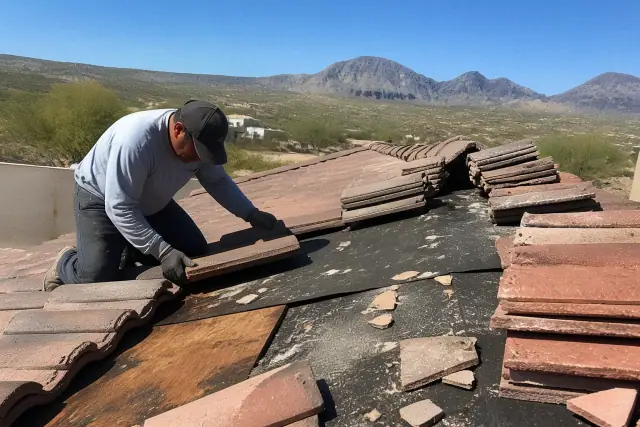
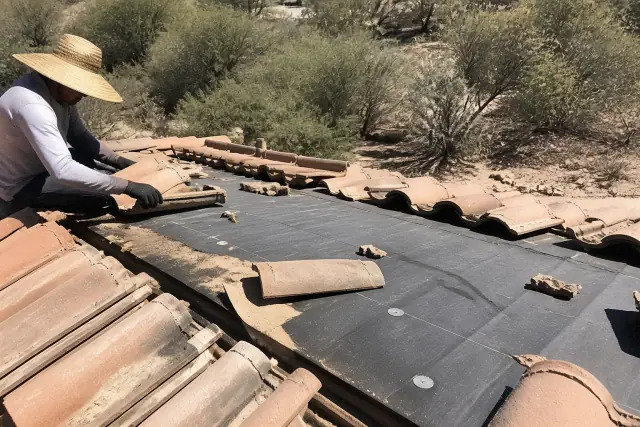
Roofer inspecting clay tiles and waterproof underlayment during a roof repair project in Green Valley, AZ.

We repair cracked tile, lifted shingles, worn flashing, and damaged roof deck sections on Green Valley homes. Most residential repair calls in the area run $395 to $1,966 depending on scope, with exact line items explained before work starts.

Explore Service

Roof Replacement

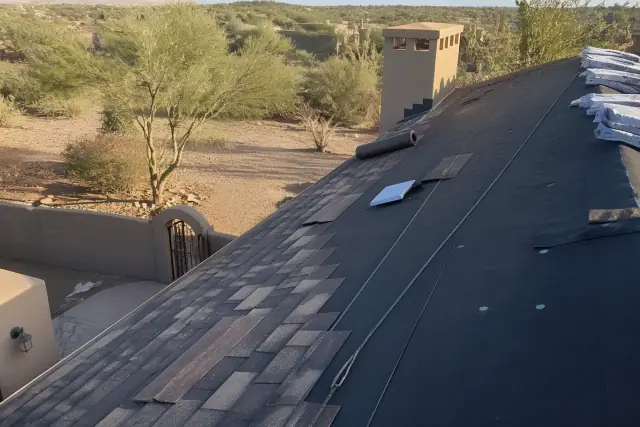
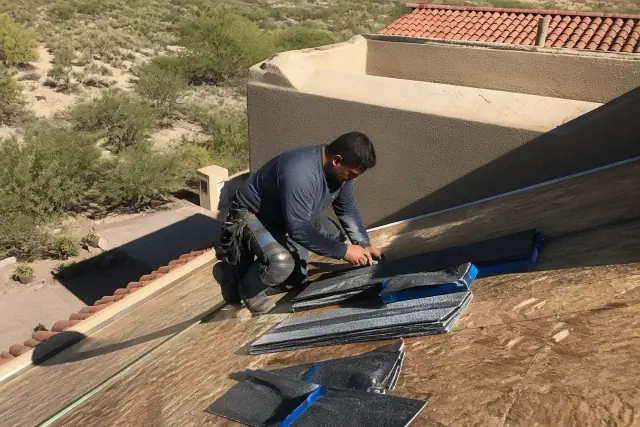
Contractor installing shingles on a steep-sloped roof at a home in Green Valley, AZ.

When deterioration is too widespread for an economical repair, we manage the tear-off, deck inspection, material installation, and final flashing details. A written scope and material breakdown are provided before removal begins.

Explore Service

Roof Coating

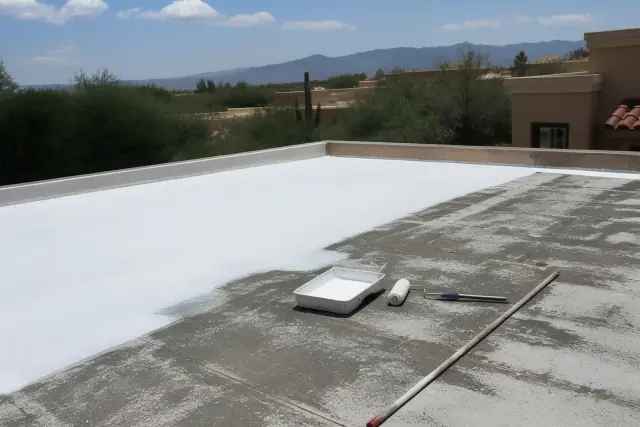
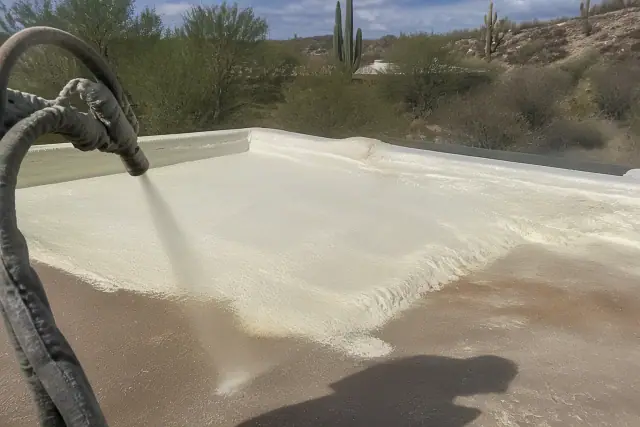
White reflective roof coating being applied to a flat residential roof in Green Valley, AZ.

Elastomeric and silicone coatings shield foam, flat, and metal roofs from UV degradation and thermal cycling. They are selected for valley conditions where roof-surface temperatures can vary more than 60 degrees between a summer afternoon and a winter night.

Explore Service

Tile Roof Repair

A roofer inspecting exposed underlayment and clay tiles on a roof in Green Valley, AZ.

We match clay and concrete tile profiles, replace damaged underlayment beneath the tile field, and reset ridge or hip tiles shifted by wind. The repair focuses on both the visible tile and the water-shedding layers below it.

Flat Roof Repair

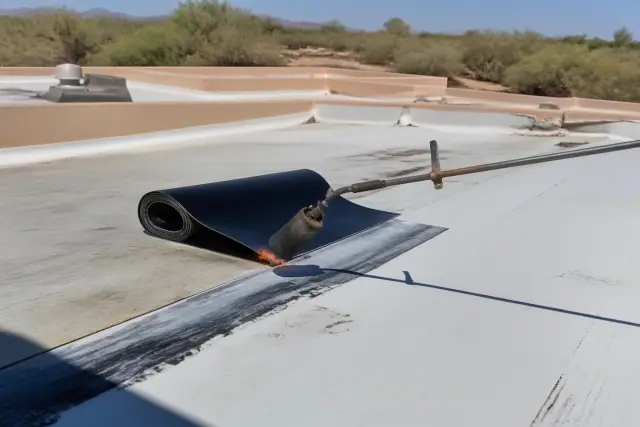
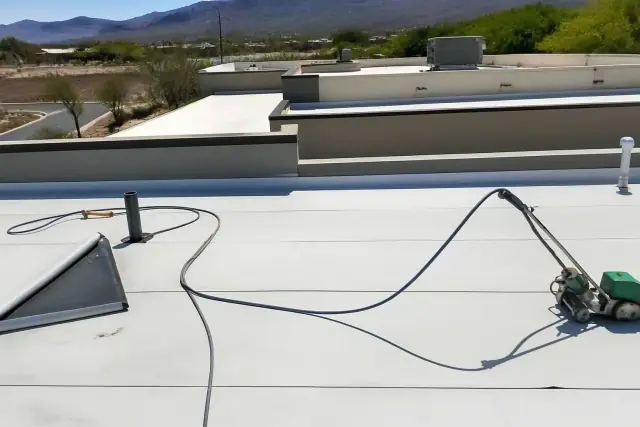
Heat-welded seam repair on a commercial flat roof in Green Valley, AZ.

Flat and low-slope roof work addresses membrane splits, ponding areas, clogged drainage, parapet flashing, and failures around penetrations. Restoring drainage and membrane continuity helps keep a small gap from spreading into a larger leak.

Foam Roofing

A contractor applying spray polyurethane foam roofing to a desert substrate in Green Valley, AZ.

We install and repair spray polyurethane foam roofing on Green Valley homes and commercial buildings. Service targets blistering, cracking, and thin spots while preserving the system's combined insulating and sealing function.

Shingle Roofing

A roofing technician kneeling on a steep shingle roof in Green Valley, AZ, securing materials to the decking.

Shingle repairs replace damaged courses, reseal exposed nail heads, and correct ridge-cap wear. South- and west-facing slopes receive close attention because intense Sonoran Desert UV can accelerate granule loss and curling.

Metal Roofing

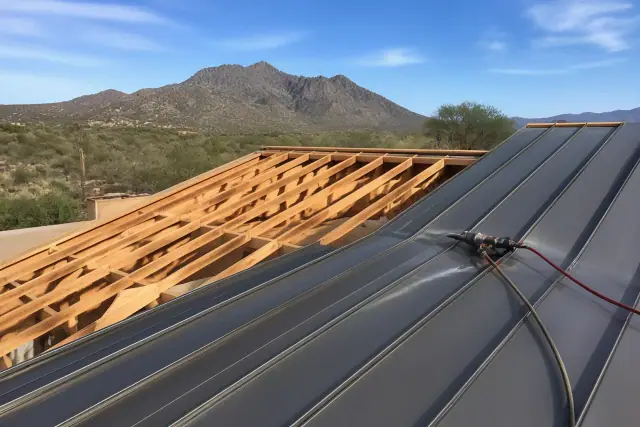
Standing seam metal roof panels being installed on a sloped framework in Green Valley, AZ.

Metal roof repairs address seam separation, fastener backout, and panel damage from wind-driven debris. In this climate, metal roofing can deliver up to 40% in annual energy-cost savings compared with darker asphalt systems.

Emergency Roof Leak Repair

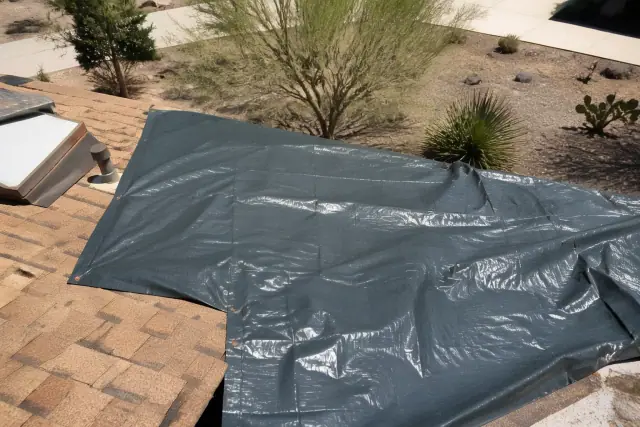
Heavy-duty tarp secured over damaged roof shingles during an emergency repair in Green Valley, AZ.

For active water intrusion, crews tarp, dry-in, and stabilize the leak so interior damage stops spreading while the permanent repair is planned. During storm weeks, active leaks are prioritized over routine estimates.

Commercial Roofing

A worker applies heat-welded seams to a commercial flat roof on a sunny day in Green Valley, AZ.

Commercial roofing service covers low-slope membranes, foam roofs, and metal panels on retail plazas, medical offices, and HOA clubhouses. Work can be scheduled around business hours when possible, with documentation for facility managers and insurance files.

Choosing Roofing Work

How to Choose the Right Roofing Service

The right roofing service depends on where water enters, the condition of the deck and underlayment, the remaining life of the material, and the property's storm exposure. A physical inspection separates a repairable defect from system-wide deterioration and provides a sound basis for comparing scope, materials, and cost.

Roof Condition Assessment

A localized flashing, tile, shingle, or membrane defect may justify repair, while widespread underlayment or deck failure can make replacement more economical. We examine the full affected area before recommending either path.

Roof-System and Material Fit

Clay and concrete tile profiles, foam, low-slope membranes, shingles, and metal panels each require different repair materials and installation details. Matching the existing system helps the repair blend correctly and perform as intended.

Drainage and Leak Path

Water on flat and low-slope roofs may travel several feet through underlayment, flashing, or penetrations before appearing indoors. Leak detection should trace the entry point instead of patching only the visible drip.

UV and Thermal Exposure

Coatings need UV-stable formulations, and shingle systems need proper attic ventilation to handle Green Valley heat. Material selection should account for daily expansion, rapid storm cooling, and prolonged desert exposure.

Storm Damage Scope

Wind-lifted shingles, displaced tiles, dented panels, and membrane punctures need photos, measurements, and material specifications. A rule applied in many jurisdictions can require a roof section to meet current code when damage affects 25% or more of that section, so the scope must be documented carefully.

Clear Scope and Work Window

An itemized price, material specification, and realistic schedule make estimates easier to compare. Weather windows matter during monsoon season, while commercial work may also need coordination around operating hours.

Green Valley Roof Issues

Common Roofing Problems for Green Valley Properties

Between May and September, extreme daytime heat and rapid cooling during monsoon rain repeatedly stress roofing materials. Green Valley also sees well over 300 days of sun annually, while storm gusts regularly exceed 50 miles per hour. Inspections focus on the failure points these conditions create across tile, foam, flat, shingle, and metal roofs.

Request Roof Inspection

Cracked or Shifted Roof Tiles

High wind can crack, slip, or displace field, ridge, and hip tiles. Even when the tile looks repairable, damaged underlayment beneath it can give rain a path to the deck.

Failing Underlayment and Flashing

Worn underlayment and loose flashing around chimneys, skylights, parapets, and other penetrations can admit water far from the ceiling stain. These details need resealing or rebuilding at the actual entry point.

Ponding and Membrane Splits

Dust and grit can clog drains on flat roofs, allowing water to pond against weakened membrane areas. Splits and gaps then spread quickly once a monsoon downpour reaches them.

Shingle Curl and Granule Loss

Intense UV exposure dries asphalt shingles, accelerates granule loss, and can curl exposed edges. Ridge caps and south- or west-facing slopes often show wear first.

Foam Blisters and Thin Coating

Years of UV exposure can leave foam roofing with blisters, cracks, or thin protective coating. Those weak spots need repair before water reaches and enlarges them.

Loose Metal Seams and Fasteners

Thermal movement and storm wind can separate seams, back fasteners out, or damage panels with airborne debris. Repairs restore the affected connection and check adjacent metal for related movement.

Why Choose Us

Why Choose Tucson Quality Roofing in Green Valley?

Roofing decisions in Green Valley must account for local materials, climate, HOA expectations, and Pima County requirements. Tucson Quality Roofing combines licensed, insured service with hands-on inspection, clear documentation, and experience across the area's residential and commercial roof systems.

Green Valley Roofing Knowledge

We understand the tile and foam systems common near older golf corridors, the shingle and metal roofs on newer construction, and the documentation local HOA committees may request. That context helps us specify materials and details suited to the property.

Physical Inspection and Photos

Every estimate begins on the roof, with an attic or interior ceiling check where possible. Photos show the customer, facility manager, or insurance adjuster what was found and why each line item is included.

Code-Aware Roofing Work

Our work accounts for Arizona Registrar of Contractors requirements and the building code adopted by Pima County. When the scope requires a permit, we handle the paperwork through Pima County Development Services and document the completed work.

Simple Process

Our Green Valley Roof Repair Process

Every project begins with a physical inspection rather than a drive-by estimate. The process moves from diagnosis and documentation to a written scope, weather-aware scheduling, roof work, cleanup, and a final record for the property owner.

01.

On-Site Roof Inspection

We walk the roof and examine tile fields, shingle courses, coatings, membranes, metal seams, flashing, penetrations, and drainage paths for visible damage.

02.

Interior and Attic Check

Where access allows, we check the attic or interior ceiling for water staining, deck damage, insulation condition, and ventilation concerns that clarify the leak path.

03.

Source Diagnosis and Photos

Problem areas are photographed and traced back through the roof assembly so the estimate addresses the source of intrusion rather than only the indoor symptom.

04.

Written Scope and Pricing

You receive material specifications and itemized pricing before work starts. We also identify permit needs and handle Pima County paperwork when the project scope requires it.

05.

Scheduling and Roofing Work

Scheduling accounts for monsoon weather and property operations. Most repairs finish in a single day, while full replacements typically take two to five days depending on size, pitch, and material.

06.

Cleanup, Walkthrough, and Records

The crew cleans the work area daily, then completes a final walkthrough. Photos and documentation are organized for the owner's records or insurance file.

Repair Outcomes

Roofing Outcomes for Green Valley Properties

Case Study 1: Source-Focused Leak Repair: Tracing water through underlayment, flashing, and penetrations directs the repair to the entry point instead of only the ceiling drip.

Case Study 2: Storm-Ready Documentation: Photos, measurements, and material details give owners and adjusters a clear record of wind, hail, tile, panel, or membrane damage.

Case Study 3: Early Intervention Value: A $400 repair can turn into an $8,000 deck replacement after two or three monsoon seasons when damage is left unaddressed.

Roofing Estimate

Schedule a Green Valley
Roof
Inspection

Request an on-site assessment for a leak, storm concern, aging roof, or coating decision. We will document the condition, explain repair and replacement options, and provide a written roofing scope.

Roof Repair Help

Green Valley Roofing FAQs

These answers cover pricing, roof life, inspections, storm damage, service areas, and the material-specific concerns common to Green Valley properties.

Call About Your Roof

Roof replacement in Arizona averages around $9,526, with a typical range of $5,868 to $13,217 depending on roof size, pitch, and material. Tile and foam systems common in Green Valley can shift the final price.

Most residential repair calls in the area run $395 to $1,966 depending on the scope. The estimate should identify the affected material, repair area, and exact line items before work begins.

The inspection covers the roof surface, flashing, penetrations, drainage, and visible damage, plus attic or interior-ceiling access where possible. Problem areas are photographed so you can understand the recommended work.

Tile roofs can last 40 to 50 years, but the underlayment often needs attention before the tile itself fails. Cracked or slipped tiles should be evaluated along with the water-shedding layer beneath them.

A well-maintained foam roof typically needs recoating every 5 to 10 years to remain watertight. The inspection should also look for blistering, cracking, and thin spots caused by UV exposure.

Asphalt shingle roofing typically lasts 20 to 30 years, although intense Sonoran Desert UV can accelerate granule loss and curling. Ventilation and the exposure of each roof slope also affect how the shingles age.

Properly installed and maintained metal roofing in this region can last 40 to 70 years. Repairs commonly address separated seams, backed-out fasteners, and wind-damaged panels.

Prolonged UV, extreme surface heat, rapid cooling during monsoon rain, and wind-driven dust all stress roof materials. Tile, foam, membranes, shingles, metal seams, coatings, and drains fail in different ways under that combination.

Look for shifted or cracked tiles, lifted shingles, punctured membranes, dented metal panels, fresh ceiling stains, and debris blocking flat-roof drains. Active water intrusion should be stabilized before interior damage spreads.

We trace moisture back through underlayment, flashing, penetrations, and roof-deck conditions rather than patching the indoor drip point alone. This is especially important on flat and low-slope roofs, where water can travel away from the entry point.

A focused repair may be appropriate when damage is localized and the surrounding roof system remains sound. Widespread deck, underlayment, membrane, or material failure can make replacement the more economical option after inspection.

Yes. The assessment can document wind-lifted shingles, displaced tile, panel dents, and membrane punctures with photos, measurements, and material specifications for the insurance file.

Yes. Commercial work includes low-slope membrane, foam, and metal-panel roofs on retail plazas, medical offices, and HOA clubhouses, with scheduling around business hours when possible.

Service covers Quail Creek, Canoa Hills, Desert Hills, Santa Rita Springs, Las Campanas, Madera Highlands, and communities near Green Valley Recreation centers. Crews also travel to Sahuarita, Continental, Amado, and the greater Tucson metro area throughout Pima County.

Small tile cracks, coating pinholes, and flashing gaps can let water reach the underlayment and deck before a ceiling stain appears. National roof repair and replacement spending reached nearly $31 billion in 2024, a 30% increase since 2022, with storm damage and deferred maintenance contributing to the rise.