Long-Term Desert Fit
Metal is especially compelling for homeowners who expect to stay 15 years or longer and value heat rejection, low maintenance, and fewer replacement cycles.
Tucson Quality Roofing sees metal roofing as a strong option for many Tucson homes because it handles intense UV exposure, monsoon wind, and 100-plus-degree summers without the granule loss associated with asphalt shingles. It is not automatically the right roof for every property, however, because panel type, roof pitch, installation details, and upfront budget all affect the result.
Metal is especially compelling for homeowners who expect to stay 15 years or longer and value heat rejection, low maintenance, and fewer replacement cycles.
At roughly 2,400 feet elevation, Tucson sees over 350 days of sun a year and daily summer temperature swings that can exceed 30 degrees. Floating clips and correctly detailed seams help panels move without loosening or oil-canning.
Compare more than the visible panel: deck condition, underlayment, fastening method, flashing, sealant, finish, roof pitch, tear-off scope, and required Tucson or Pima County permitting all shape the final performance and price.
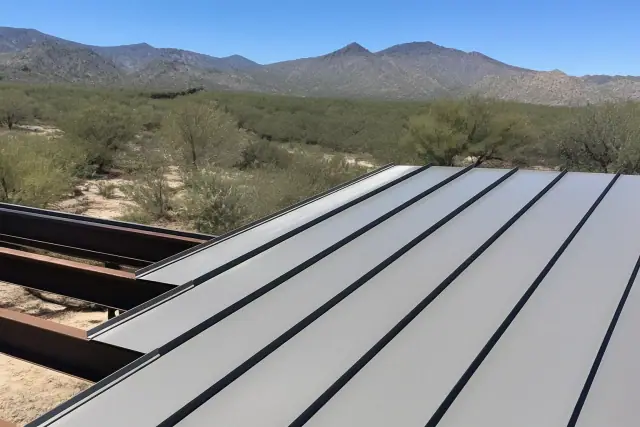
Show raised seams, a reflective finish, and full sun on a Tucson roof. These details illustrate how the panel profile sheds monsoon rain while limiting exposed fasteners and solar heat gain.
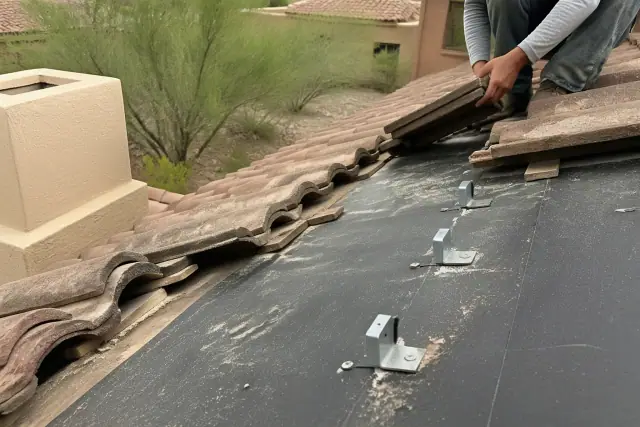
Show the layers beneath the panels and how concealed clips permit controlled movement. A solid deck and underlayment also reduce the rain and hail noise associated with older exposed-fastener roofs.
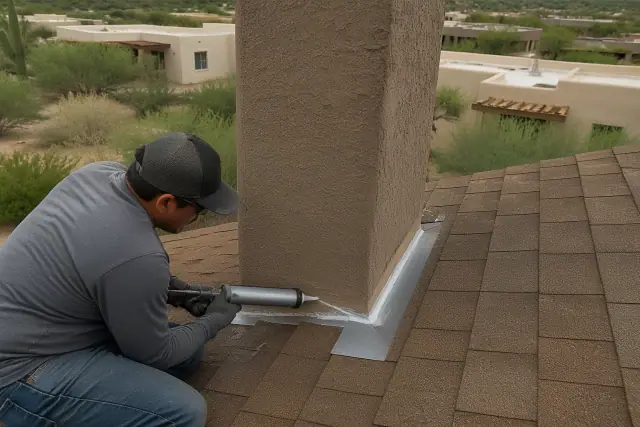
Show close-up flashing, sealed transitions, and clean water paths around a valley or vent. Metal-roof leaks usually begin at penetrations, valleys, or transitions rather than in the panel field.
Reflective metal panels paired with a cool-roof coating can reduce cooling costs by up to 15% compared with dark asphalt shingles. Coatings that meet Cool Roof Rating Council standards can increase solar reflectance further.
Metal roofing carries a Class A fire rating, the highest available, and many products meet the UL 2218 Class 4 impact-resistance standard. Confirm the exact product documentation before relying on either classification.
Plan an annual inspection of fasteners, sealant at penetrations, and panel seams, particularly after monsoon season. Catching fastener backout or sealant failure early helps preserve the roof assembly.
Fastener backout, failed flashing sealant, and minor panel denting are common repair items, and most are completed in a single visit. Active leaks still require safe access and a permanent flashing repair after the immediate water intrusion is stopped.
| Roof Situation | Metal-Roof Fit | What to Verify |
|---|---|---|
| Long-term Tucson home | Strong fit when service life and heat rejection matter. | Roof pitch, deck condition, coating, and installation details. |
| Upfront budget is the priority | Corrugated panels offer a lower entry cost than standing seam. | Fastener type, underlayment, and expected maintenance. |
| Low-slope commercial roof | Metal may work alongside foam or coated flat-roof sections. | Drainage, transitions, penetrations, and compatible assemblies. |
| Hail- or wind-exposed property | Impact-rated systems can be attractive, but cosmetic denting is possible. | Panel gauge, attachment method, rating documentation, and insurer rules. |
Yes-metal roofing can be an excellent choice in Arizona when the roof structure, budget, and installation method are a good match. It resists UV degradation, sheds monsoon rain and windblown dust, reflects more solar heat than dark asphalt, and does not provide fuel for wildfire embers. Tucson's dry climate also slows corrosion when the protective coating remains intact.
Roof pitch, deck condition, roofline complexity, tear-off needs, panel gauge, coating, and attachment method determine whether metal is practical and which system fits. Corrugated panels lower the entry price, while standing seam conceals fasteners and is designed to accommodate movement; foam or coated flat-roof assemblies may be more suitable for some low-slope sections. Over a 30-year ownership period, metal's higher initial cost may be offset by avoiding additional shingle-roof replacements, but the comparison should use the actual scope for the property.
Will a metal roof be noisy? A solid deck and underlayment reduce rain and hail noise substantially compared with older exposed-fastener assemblies. Will it rust? Tucson's low humidity is favorable, but scratches in the protective coating and poorly detailed penetrations still need attention. Can insurance cost less? Many carriers consider documented impact, fire, and wind resistance, but any premium discount depends on the policy and should be confirmed with the insurer before installation.
Share the roof type, pitch, visible condition, and the goals for your property. A local roofing professional can compare panel profiles, deck and tear-off needs, fastening, flashing, and coating details, then provide a scope and estimate tailored to the roof.