Typical Recoat Window
Most foam roofs in Tucson need a fresh elastomeric coating every 8 to 12 years. Premium systems under ideal conditions may reach 15 years, but Arizona exposure often shortens that interval.
Tucson Quality Roofing generally recommends evaluating a Tucson foam roof for recoating every 8 to 12 years. Intense Sonoran Desert sun, roof orientation, drainage, and the original coating thickness can move that window earlier or later. A condition-based inspection helps protect the foam substrate before UV exposure and moisture turn routine maintenance into repair.
Most foam roofs in Tucson need a fresh elastomeric coating every 8 to 12 years. Premium systems under ideal conditions may reach 15 years, but Arizona exposure often shortens that interval.
South and west exposure, ponding water, foot traffic, rooftop equipment, and a thin original coating accelerate wear. A coating applied at 20 dry mils can outlast one applied at 12 mils under otherwise identical sun exposure.
Recoating is appropriate only when the SPF substrate remains dry, sound, and bonded to the roof deck. Saturated, delaminated, or compressed foam must be removed and replaced before the protective topcoat is renewed.
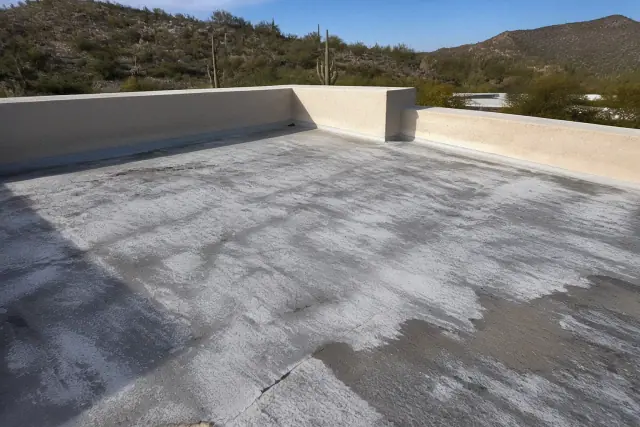
Show white or gray powder residue beside fine alligator-pattern cracks in a white elastomeric coating. These early warning signs reveal lost UV resistance and flexibility.
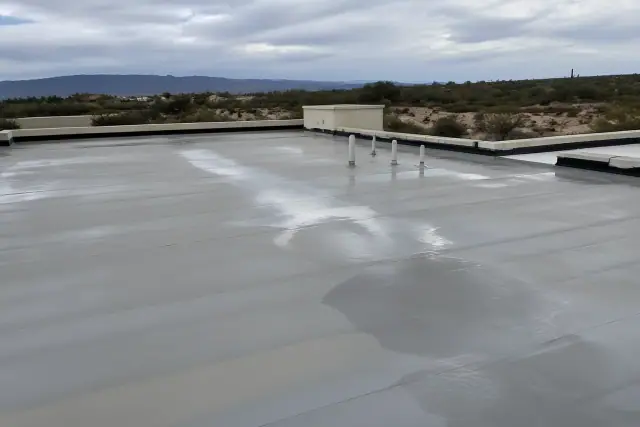
Show standing water remaining on a low roof area near a drain. Water that sits more than 48 hours accelerates coating breakdown and raises the risk of moisture reaching the foam.
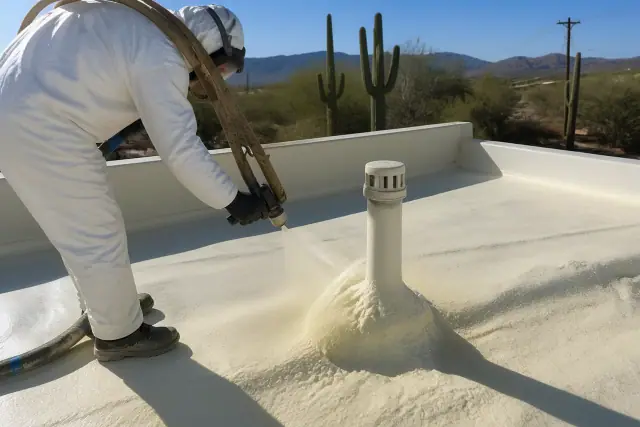
Show a technician checking a soft or spongy area beside flashing or rooftop equipment. This condition can indicate absorbed water that must be cut out before recoating.
When the foam is dry and well bonded, recoating in the Tucson area typically costs about $1.50 to $4.50 per square foot. Coating type, surface preparation, and minor foam repair determine where the project falls within that range.
Bubbling, delamination, wet foam, or lost insulating R-value changes the scope from a simple recoat. Damaged sections should be cut out and restored so a new coating does not seal moisture in place.
Check drains, flashing, penetrations, and the full roof surface every 12 to 24 months. Finding cracks or ponding before summer storms helps keep the work focused on coating maintenance instead of leak repair.
Letting a Tucson foam roof pass year 12 with a worn coating increases the chance that UV will reach the substrate. Recoating over wet or unsound foam hides damage rather than fixing it.
| Typical Interval | Roof Conditions | Planning Guidance |
|---|---|---|
| Every 8 years | South or west exposure, thin coating, ponding, or heavy rooftop equipment | Inspect early and plan the recoat before widespread cracking. |
| Every 10 years | Standard residential application, moderate exposure, and routine inspections | Use the roof's condition to confirm timing. |
| Every 12 years | Higher initial mil thickness, good drainage, and some shade | Do not extend the interval if chalking or cracks appear. |
| Up to 15 years | Premium coating, ideal slope, minimal foot traffic, and consistent maintenance | Verify that the coating and foam remain sound before recoating. |
SPF expands into a seamless insulating layer, while the elastomeric topcoat provides the exposed waterproof and reflective surface. Tucson's roughly 350 days of sunshine a year and high UV from April through September can wear that sacrificial layer faster than the 10 to 15 year service life commonly associated with moderate exposure. Restoring the coating at the specified dry mil thickness preserves reflectivity, limits direct UV contact with the foam, and supports performance under ASTM D6083 criteria for elastomeric roof coatings.
Unshaded roofs in the Foothills or Oro Valley often trend toward the 8 to 10 year range, especially on south- and west-facing areas. Tucson's July through September monsoon season adds wind-driven rain and hail, while daily temperature swings of 30 to 40 degrees stress a coating that has already lost flexibility. Flat drainage areas, HVAC equipment, satellite mounts, and maintenance traffic create localized wear on homes, strip retail near the University of Arizona, and warehouse roofs along the I-10 corridor.
How long can a maintained foam roof last? Consistent recoating can move a system from a roughly 15 year life toward 20 to 30 years or longer. What should a homeowner budget? A typical Tucson-area single-family recoat runs about $2,000 to $4,000, while commercial totals scale with roof size and detail work. Can it be a DIY project? Correct preparation, cure timing, and mil thickness matter; an under-applied roller-and-five-gallon-bucket coating can fail within 2 to 3 years instead of lasting a full decade.
A physical roof assessment can confirm the coating's condition, drainage, penetration details, and whether the foam remains dry enough for recoating. Use those findings to set a realistic maintenance window before small surface problems become deck-level repairs.